Knee Flexion Recovery Tracker
Visual Knee Bend Simulator
Recovery Milestones
Click on a milestone to see the target angle:
90 degrees - Chair sitting
100-110 degrees - Stairs
115-120 degrees - Deep movements
125+ degrees - Full function
Daily Pain & Progress Log
Quick Reference
- ✓ Safe: Dull ache, tightness
- ✗ Stop: Sharp stabbing pain
- ✗ Stop: Muscle spasms
- Ice: After every session
- Meds: 30 min before exercises
It is day three after your Total Knee Arthroplasty (TKA), also known as a total knee replacement. You are sitting on the edge of the bed, and your surgeon’s words echo in your head: "Get that knee bent." But when you try, it feels like someone has poured concrete into your joint. Panic sets in. Do you push harder? Do you grab your foot and yank it toward your butt? The short answer is no. You should never force your knee to bend with brute strength or external leverage immediately after surgery.
However, you must achieve knee flexion the ability to bend the knee joint. Without it, you will walk with a limp, struggle to climb stairs, and risk permanent stiffness. The goal is aggressive but controlled movement, not violent forcing. Understanding the difference between "pushing through pain" and "injuring soft tissue" is the single most important factor in your early recovery.
The Science Behind Stiffness and Swelling
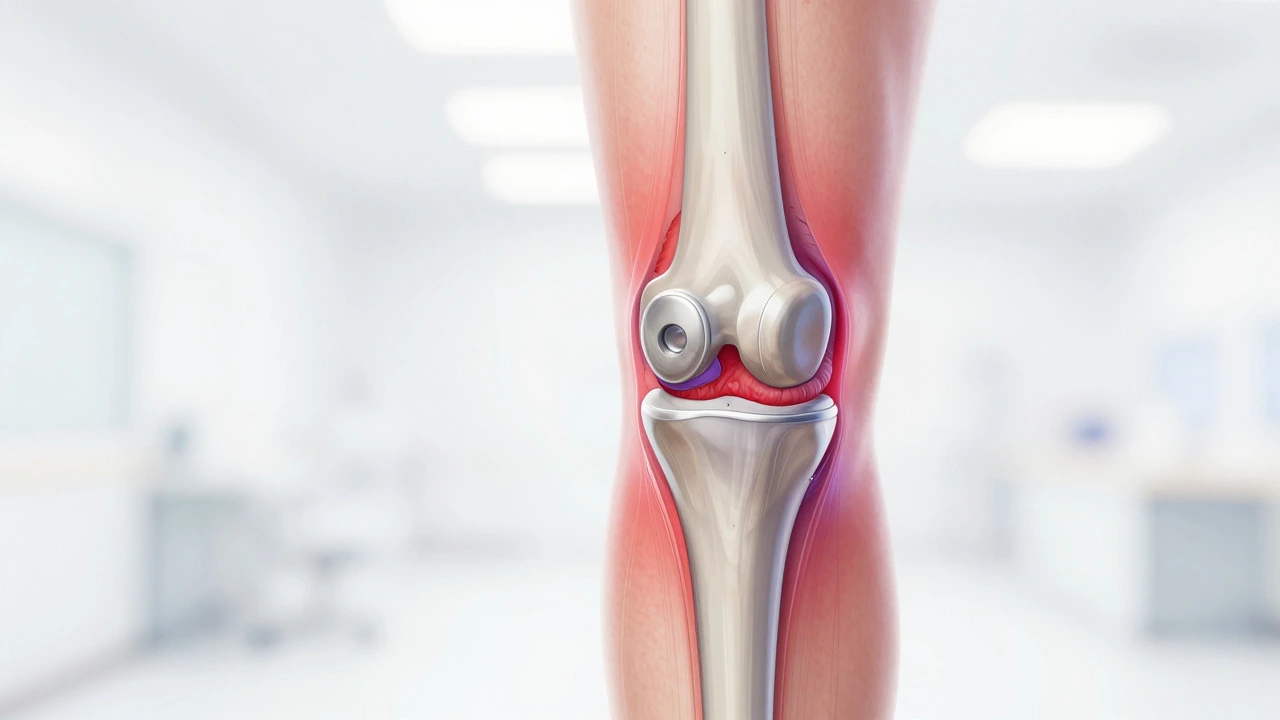
To understand why you shouldn't just muscle your way through the bend, you need to look at what happens inside your leg during the first few weeks. When surgeons replace your knee, they disrupt the joint capsule the fibrous envelope surrounding the knee joint and surrounding muscles. This triggers an inflammatory response. Your body sends fluid to the area to heal it, resulting in swelling (edema).
Swelling is the enemy of range of motion. Think of your knee joint like a tight glove. If the hand inside swells up, the glove becomes impossibly tight. If you then try to force your fingers into a fist, you aren't just fighting the fabric; you are crushing the swollen tissue against the bone. In medical terms, this can lead to arthrofibrosis a condition characterized by excessive scar tissue formation within a joint, where the body overcompensates for trauma by laying down dense, non-stretchy collagen fibers. This scar tissue locks the joint permanently if not managed correctly.
Therefore, the strategy isn't to fight the swelling with force. It is to manage the swelling so the joint has room to move. This is why ice and elevation are not optional luxuries; they are mechanical necessities for bending.
Safe Techniques vs. Dangerous Forcing
There is a distinct line between effective stretching and harmful forcing. Here is how to tell the difference and execute the right movements.
- The Heel Slide: Lie flat on your back. Slowly slide your heel toward your buttocks. Use your other foot or a towel looped around your ankle to assist gently. Stop when you feel a strong stretch, not sharp pain. Hold for 10 seconds. Repeat 10 times.
- The Seated Lean: Sit in a chair with your legs straight out. Place a small rolled-up towel under the affected knee. Gently lean forward from your hips, keeping your back straight. This uses gravity to encourage the knee to bend slightly without active muscle contraction.
- The Doorway Stretch: Stand in a doorway. Loop a belt or towel around your foot. Pull gently while leaning away. This allows you to control the tension precisely. If you lose balance or feel a tearing sensation, stop immediately.
What does "forcing" look like? It looks like having a family member stand on your foot while you lie down. It looks like grabbing your ankle with your hands and pulling until you scream. It looks like ignoring the "guarding" reflex, where your quadriceps spasm to protect the joint. When your quad spasms, it locks the knee. Fighting a spasm with force only makes the spasm stronger. Instead, relax the thigh muscle completely before attempting the bend.
The Role of Pain Management in Mobility
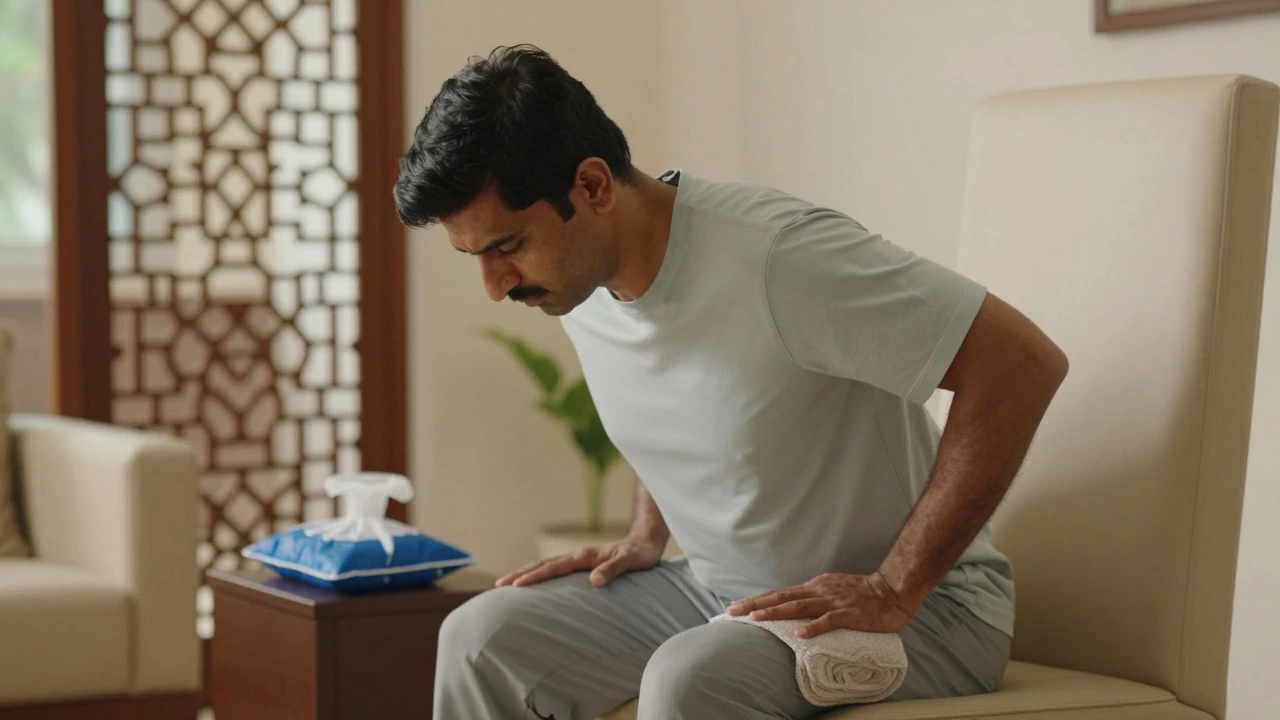
You cannot bend a knee that is screaming in pain. Your brain will shut down the movement to protect itself. This is why pre-medicating is crucial. Take your prescribed pain medication 30 to 45 minutes before your physical therapy session or home exercise routine. The goal is not to be numb, but to be comfortable enough to move.
If you are relying solely on over-the-counter options like Ibuprofen a nonsteroidal anti-inflammatory drug used to relieve pain and reduce inflammation or Acetaminophen a common analgesic and antipyretic medication, ensure you are following dosage limits. Many patients in India and globally find that combining these with ice packs significantly reduces the inflammatory blockage. Consult your doctor about nerve blocks or local anesthesia injections if oral meds aren't enough, as unmanaged pain leads to immobility, which leads to stiffness.
Timeline: What to Expect Week by Week
Setting realistic expectations prevents panic. Here is a typical progression for post-operative rehabilitation the process of restoring function after surgery.
| Timeframe | Target Flexion | Key Activity |
|---|---|---|
| Week 1-2 | 90 degrees | Heel slides, seated dangling |
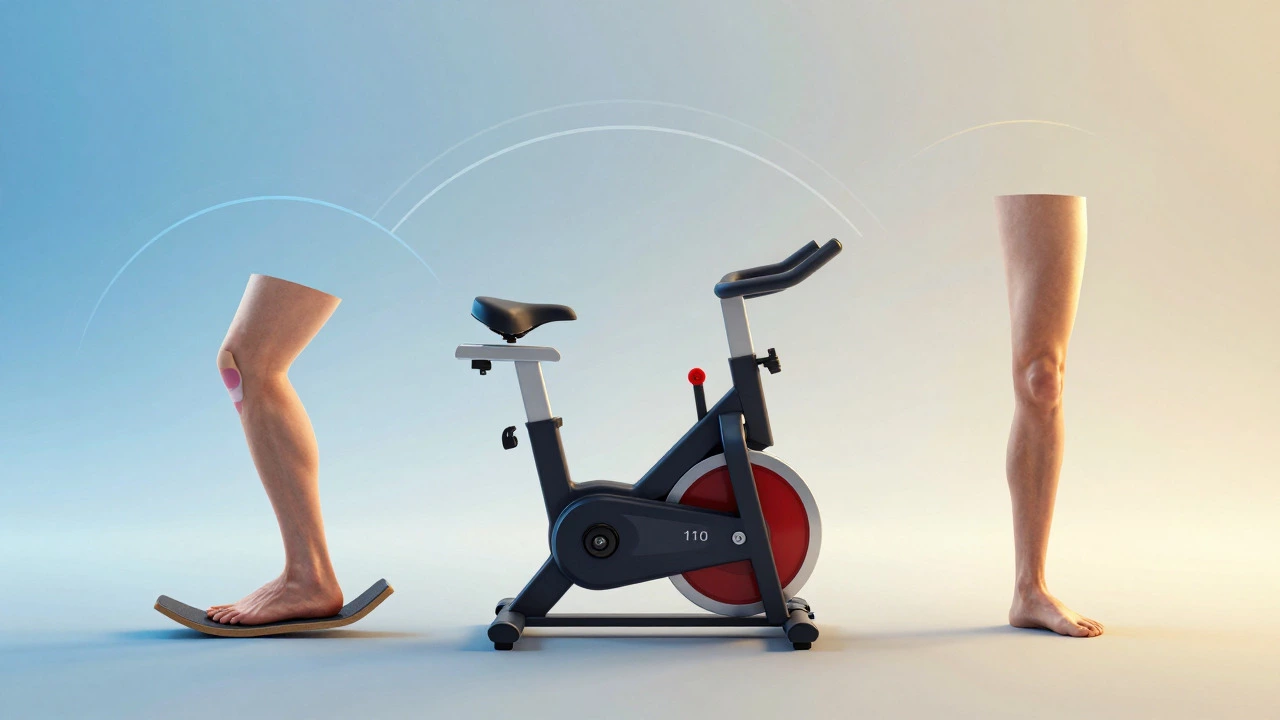
| Week 3-4 | 100-110 degrees | Stationary bike (low seat) |
| Month 2 | 115-120 degrees | Deep squats (assisted), lunges |
| Month 3-6 | 125+ degrees | Full functional use, sports prep |
Note that 90 degrees is critical. You need 90 degrees to sit comfortably in a standard chair and to get in and out of a car. If you are stuck at 70 degrees at week two, call your surgeon. Early intervention is cheaper and less painful than late-stage manipulation.
When to Seek Professional Help
Sometimes, despite your best efforts, the knee refuses to bend. This might be due to severe swelling, poor compliance with exercises, or biological factors like excessive scar tissue. In these cases, Manipulation Under Anesthesia (MUA) a procedure where the surgeon bends the knee while the patient is asleep may be required. This is typically done between weeks 4 and 8 post-surgery. Waiting too long reduces the success rate of MUA because the scar tissue matures and becomes tougher.
Red flags that require immediate attention include:
- Inability to bear any weight on the leg.
- Signs of infection: fever, redness spreading from the incision, or pus discharge.
- Sudden increase in swelling accompanied by calf pain (potential blood clot/DVT).
- No improvement in flexion after two weeks of consistent daily exercises.
Tips for Home Recovery in Humid Climates
Living in places like Bangalore or other humid regions can affect recovery. Humidity can sometimes exacerbate swelling perception. Keep your operating room cool. Use fans directed at the leg (not blowing directly on open wounds if still draining). Ensure your compression stockings are clean and dry. Moisture under the stocking can cause skin breakdown, adding another layer of pain that distracts from your bending goals.
Also, consider the furniture in your home. Low sofas are your enemy. They require more than 90 degrees of flexion to sit down and make standing up difficult. Stick to firm chairs with higher seats until you regain strength. A raised toilet seat can also prevent the need for deep squatting during the initial healing phase.
How much pain is normal when bending my knee after replacement?
You should expect discomfort and a feeling of tightness, often rated 4-6 out of 10 on the pain scale. Sharp, stabbing pain that radiates down the leg or causes immediate muscle spasms is not normal and suggests you are pushing too hard. Dull ache is acceptable; sharp pain is a warning sign.
Can I use a continuous passive motion (CPM) machine?
CPM machines are controversial. Some surgeons recommend them for the first 48 hours to prevent clotting and maintain gentle motion. Others argue they are unnecessary if you do active exercises. Ask your specific surgeon. If you use one, do not set it to maximum flexion immediately; start low and increase gradually.
Is heat better than ice for knee stiffness?
In the first 6-8 weeks, ice is superior for reducing swelling, which is the primary blocker of flexion. Heat can be used later in the day to relax muscles before stretching, but always end your session with ice to keep inflammation down. Avoid heat directly on the incision site until fully healed.
How many times a day should I do flexion exercises?
Frequency matters more than intensity. Aim for 5-10 sessions per day, each lasting 10-15 minutes. Short, frequent bursts prevent the joint from stiffening up again. Doing one hour-long session once a day is less effective and more likely to cause excessive swelling.
Will I ever be able to kneel again?
Most patients can kneel, but it takes time. Initially, the sensation of the implant and the numbness around the incision make kneeling uncomfortable. Start by kneeling on a soft pillow. About 50-70% of patients return to kneeling eventually, though some prefer to avoid it indefinitely due to discomfort.