Stage 4 Cancer Remission Potential Estimator
This estimator provides a general indication of remission potential based on current medical advancements described in the article. It is not a substitute for professional medical advice.
Estimated Outlook
You hear the words "Stage 4" and your world stops. It feels like a final verdict, a door slamming shut. But here is the truth that many oncologists are sharing more openly now: Stage 4 cancer is no longer automatically a terminal diagnosis for everyone. Yes, it means the cancer has spread (metastasized) beyond where it started. But does it mean you cannot go into remission? Absolutely not. In fact, thousands of patients every year achieve periods where their scans show no sign of disease, or at least, significantly reduced tumor burden.
This article cuts through the fear to give you real answers. We will look at what remission actually means in late-stage disease, which treatments are driving these results, and why some cancers respond better than others. If you or a loved one is facing this diagnosis, understanding the difference between "cure" and "remission" is your first step toward fighting effectively.
What Does Remission Actually Mean in Stage 4?
First, let’s clear up the language. Doctors use specific terms for a reason. When we talk about remission in the context of advanced cancer, we are usually talking about two things:
- Partial Remission: The tumors have shrunk by at least 30-50%, but they haven’t disappeared. You still have cancer, but it’s less aggressive or smaller.
- Complete Remission: All signs and symptoms of cancer disappear. Scans show no evidence of disease (NED). This doesn’t always mean the cancer is gone forever; microscopic cells could still be hiding.
In Stage 4, achieving complete remission is harder than in earlier stages because the disease is systemic-it’s everywhere. However, it is possible. The goal often shifts from "curing the patient completely" to "controlling the disease long-term," turning cancer into a chronic condition like diabetes or hypertension. Many people live with controlled Stage 4 cancer for years, enjoying quality life while taking maintenance therapies.
Why Some Cancers Respond Better Than Others
Not all Stage 4 cancers behave the same way. The biology of the tumor matters more than just the stage number. For instance, certain types of breast cancer and lung cancer have seen massive improvements due to targeted therapies. If a tumor has specific genetic mutations, drugs can attack those specific weaknesses.
Consider HER2-positive breast cancer. This subtype was once considered very aggressive with poor outcomes. Today, thanks to drugs like trastuzumab and newer antibody-drug conjugates, many women with Stage 4 HER2+ breast cancer achieve long-term remission. Similarly, non-small cell lung cancer (NSCLC) patients with EGFR mutations or ALK rearrangements often see dramatic responses to targeted pills, sometimes shrinking tumors so much they become undetectable on scans.
| Cancer Type | Key Treatment Advances | Remission Likelihood |
|---|---|---|
| Breast Cancer (HER2+) | Targeted therapy, Immunotherapy | High potential for long-term control |
| Lung Cancer (EGFR/ALK+) | Tyrosine Kinase Inhibitors (TKIs) | Significant tumor shrinkage common |
| Colorectal Cancer | Chemo + Biologics, Liver resection | Moderate; depends on spread location |
| Pancreatic Cancer | FOLFIRINOX chemo, Surgery (if oligometastatic) | Lower; hard to achieve complete remission |
| Melanoma | Immunotherapy (Checkpoint inhibitors) | Increasingly high; durable remissions seen |
The Game Changers: How Modern Treatments Induce Remission
If you are asking how this is possible when old-school chemo often failed, the answer lies in three major breakthroughs. These aren't theoretical-they are standard care in top hospitals across India and globally.
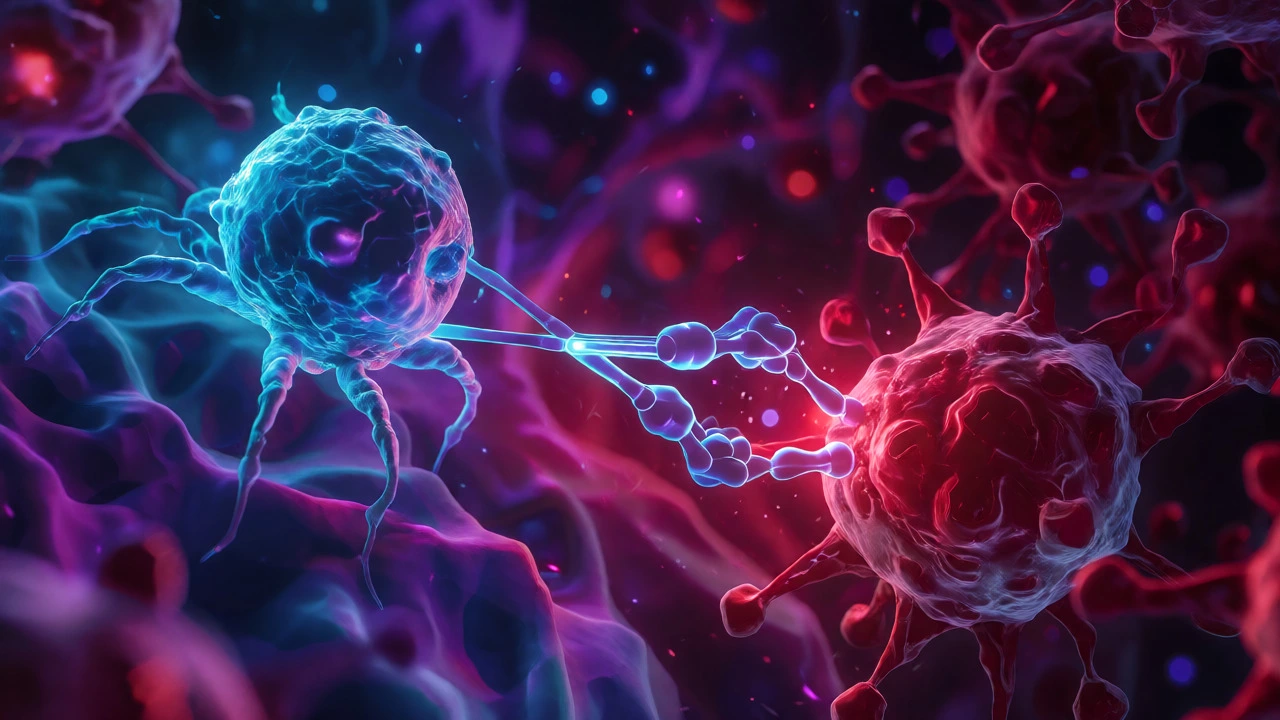
1. Immunotherapy: Instead of poisoning cancer cells directly, drugs like pembrolizumab (Keytruda) teach your own immune system to recognize and kill cancer. In melanoma and lung cancer cases, this has led to "durable remissions," where patients stay cancer-free for five, ten, or even fifteen years after stopping treatment. It works best when the tumor expresses a protein called PD-L1.
2. Targeted Therapy: These drugs block specific molecules involved in tumor growth. Unlike chemo, which hits fast-growing cells everywhere (causing hair loss and nausea), targeted therapies are precise. They work only if your tumor has the specific mutation. That’s why genetic testing of your biopsy sample is critical. Without knowing your tumor's DNA profile, you might miss out on a drug that could put you into remission.
3. Antibody-Drug Conjugates (ADCs): Think of these as smart bombs. An antibody finds the cancer cell, attaches itself, and releases a potent chemotherapy agent directly inside the cell. Drugs like Enhertu have shown remarkable success in breast and gastric cancers, inducing deep remissions even in heavily pre-treated patients.
Factors That Influence Your Odds of Remission
Your personal outcome isn't just about luck or the type of cancer. Several factors play a huge role in whether Stage 4 cancer goes into remission:
- Burden of Disease: How many organs are affected? A patient with cancer in the lungs and liver generally has a better prognosis than someone with widespread bone and brain metastases.
- Performance Status: Can you walk, eat, and perform daily activities independently? Patients with a higher performance status tolerate aggressive treatments better, leading to better outcomes.
- Response to First-Line Therapy: This is crucial. If the first round of treatment shrinks the tumor significantly, you are statistically more likely to maintain remission. If the cancer grows during the first treatment, doctors switch strategies quickly.
- Access to Clinical Trials: Sometimes, standard care isn't enough. New drugs in trials offer hope for remission when other options fail. Major centers in Bangalore, Mumbai, and Delhi often run these trials.

Living with Uncertainty: Remission vs. Cure
Here is the hard part. Even if you reach complete remission, most oncologists won't call it a "cure" immediately. Why? Because Stage 4 cancer has a tendency to recur. Microscopic cells may remain dormant for months or years before waking up again.
This creates a psychological challenge. You might feel anxious waiting for your next scan. This is normal. The strategy now becomes surveillance. You undergo regular imaging (CT, PET scans) and blood tests (tumor markers) to catch any recurrence early. Early detection of return allows for quick intervention, often putting the disease back into remission.
Many survivors describe living in "remission mode." They take oral medications daily, attend check-ups every three months, and focus on lifestyle changes-diet, exercise, stress management-to keep their body hostile to cancer growth. It’s a different kind of life, but it’s a life filled with purpose, travel, and family time, not just waiting rooms.
Action Plan: What Should You Do Now?
If you are newly diagnosed with Stage 4 cancer, don't panic. Here is a concrete checklist to maximize your chances of remission:
- Get Comprehensive Genomic Profiling: Ask your oncologist if your tumor tissue has been tested for mutations (NGS panel). Don't settle for basic testing if available.
- Seek a Second Opinion: Especially for complex cases. Different specialists may propose different combinations of immunotherapy or targeted drugs.
- Ask About Clinical Trials: Check platforms like ClinicalTrials.gov or local hospital registries. Access to new drugs can change everything.
- Optimize Your Body: Start physical activity if possible. Maintain a healthy weight. Stop smoking and limit alcohol. Your body needs strength to handle treatment.
- Build a Support System: Mental health impacts physical outcomes. Join support groups or speak with a counselor who specializes in oncology.
Remember, statistics are averages. They include people who didn't get treated, people who had other severe health issues, and people who didn't have access to modern drugs. Your story is unique. With the right team and the right treatment, Stage 4 remission is a realistic goal, not just a fantasy.
Is Stage 4 cancer always fatal?
No. While Stage 4 cancer is serious and historically had lower survival rates, advancements in immunotherapy and targeted therapies have significantly improved outcomes. Many patients achieve long-term remission and live for many years, treating the cancer as a chronic condition rather than an immediate terminal event.
What is the difference between remission and cure?
Remission means there are no detectable signs of cancer, but microscopic cells may still exist. Cure implies the cancer is completely eradicated and unlikely to return. In Stage 4, doctors prefer the term remission because the risk of recurrence remains higher than in earlier stages, requiring ongoing monitoring.
How long does it take to know if treatment is working?
Typically, doctors assess response after 2-3 cycles of treatment (often 6-9 weeks). They use CT or PET scans to measure tumor size. Blood tests for tumor markers can also provide early clues. If tumors shrink or stabilize, the treatment is considered effective.
Can I stop treatment if I am in remission?
It depends on the type of cancer and the drug used. Some targeted therapies require continuous daily dosing to keep cancer suppressed. Others, like immunotherapy, may be given for a set period (e.g., 2 years) and then stopped. Always consult your oncologist before stopping any medication, as premature cessation can lead to rapid recurrence.
Does diet affect Stage 4 cancer remission?
While no specific diet cures cancer, maintaining good nutrition helps your body tolerate treatment better. A balanced diet rich in fruits, vegetables, lean proteins, and whole grains supports immune function. Avoiding processed sugars and excessive alcohol is recommended. Weight management is also linked to better outcomes in several cancer types.