Dental Implant Pain & Recovery Estimator
Procedure Details
Estimated Pain Profile
Choose your procedure to see estimated pain levels.
Recovery Timeline
It’s one of the most common fears keeping people from fixing missing teeth. You’ve heard stories about drilling into bone, swelling that makes you look like a chipmunk, and days spent wincing every time you swallow. So, how painful is getting a dental implant, which is a titanium screw surgically placed into the jawbone to replace a tooth root? The short answer: surprisingly manageable. Most patients describe the actual procedure as painless due to anesthesia, and the recovery period involves mild to moderate discomfort that responds well to over-the-counter medication.
But "manageable" doesn't mean "non-existent." Understanding exactly what kind of sensation to expect helps you prepare mentally and physically. This isn't just about gritting your teeth; it's about knowing when the soreness is normal healing versus a sign of something going wrong. Let’s break down the reality of implant pain, phase by phase, so you aren’t caught off guard.
The Procedure Itself: Numb, Not Painful
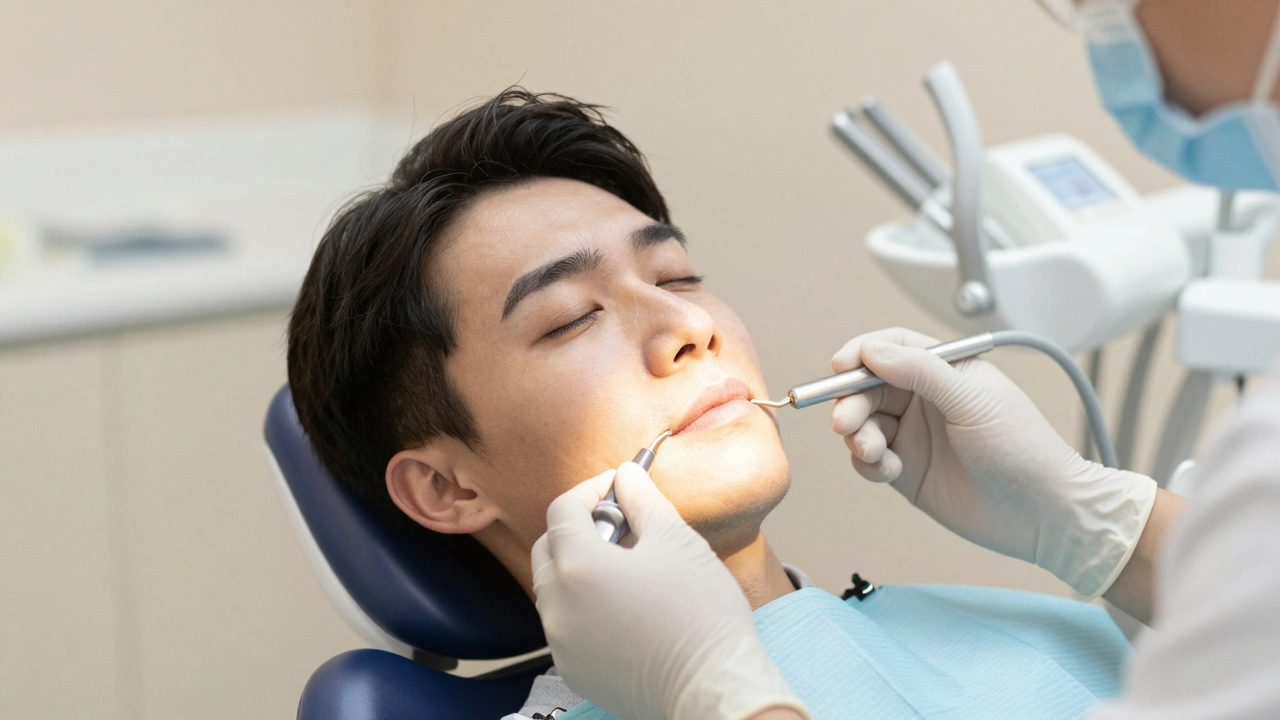
If you are worried about feeling the drill or the surgeon working on your jaw, you can relax. During the placement of the implant fixture, you will be under local anesthesia. This numbs the specific area completely. You might feel pressure, vibration, or movement, but you should not feel sharp pain. If you do feel anything resembling pain, you signal the dentist immediately, and they administer more anesthetic.
For those with high anxiety or complex multi-implant cases, options like nitrous oxide (laughing gas) or IV sedation are available. These don't necessarily reduce physical pain further since the local anesthetic handles that, but they eliminate the stress response. Many patients in Bangalore and other major cities opt for conscious sedation because it turns the experience into a nap rather than a vigil. The key takeaway here is that the surgical act itself is not the source of significant pain for the vast majority of people.
The First 24-48 Hours: Peak Discomfort
The real test begins when the anesthesia wears off, usually 3 to 5 hours after the procedure. This is when the inflammation cycle kicks in. Your body recognizes the surgical site as an injury and sends blood flow and immune cells to heal it. This biological process causes throbbing, tenderness, and stiffness.
On a pain scale of 1 to 10, most patients report a level of 3 to 5 during this window. It feels similar to having had a wisdom tooth pulled, perhaps slightly more intense if multiple implants were placed or if bone grafting was required. The pain is typically dull and achy rather than sharp. It peaks around day two and then starts to subside. Ice packs applied to the cheek near the surgical site for 20 minutes on and 20 minutes off can significantly reduce this initial swelling and associated ache.
Days 3-7: The Turning Point
By the third day, the acute pain should have faded considerably. You might still feel tenderness when chewing or touching the area, but the constant throbbing should be gone. This is the phase where many people make mistakes by eating too aggressively. Even though it doesn't hurt to touch the gum, the underlying bone and tissue are still fragile. Biting into hard foods now can cause micro-trauma, restarting the inflammation clock.
During this week, you transition from ice to warm compresses if there is lingering bruising or muscle stiffness from keeping your mouth open during surgery. Stitches are often dissolvable, but if they need removal, that happens around day 7 to 10. Suture removal is virtually painless-just a quick snip and pull.

Bone Grafting: The Variable Factor
Not all implant surgeries are created equal. If you have lost bone density in your jaw, the surgeon may perform a bone graft, which is a procedure using synthetic material, donor bone, or your own bone to rebuild the jaw structure before placing the implant. This adds complexity and, consequently, more discomfort. Bone grafting involves harvesting tissue (often from the back of the mouth or hip) or packing granules into the socket. This creates two healing sites instead of one.
Pain levels with bone grafting can reach a 6 or 7 initially. The swelling is also more pronounced. However, even with grafting, the pain is rarely unmanageable. Patients often compare it to a severe sinus headache or a bad toothache that slowly improves over ten days. It requires stricter adherence to soft-food diets and gentle hygiene practices.
Managing Pain: What Actually Works
You don't always need prescription opioids to get through implant recovery. In fact, modern dentistry leans heavily on non-opioid strategies because they are safer and equally effective for this type of localized trauma. Here is a practical protocol that works for most patients:
- NSAIDs are your best friend: Ibuprofen (Advil/Motrin) reduces both pain and inflammation. Taking it regularly for the first 48 hours prevents the pain from spiking rather than chasing it.
- Acetaminophen combination: For stronger relief without steroids or opioids, alternating ibuprofen with acetaminophen (Tylenol) provides synergistic pain control. Always consult your doctor for dosing schedules.
- Cold therapy: As mentioned, ice packs limit swelling. Less swelling means less pressure on nerves, which equals less pain.
- Salt water rinses: Starting 24 hours post-surgery, gentle rinses with warm salt water keep the site clean and soothe irritated gums. Do not swish vigorously; let the liquid roll around your mouth and drip out.
Avoid aspirin, as it thins the blood and can increase bleeding, which complicates healing. Also, skip the smoking. Nicotine constricts blood vessels, starving the healing tissue of oxygen. This doesn't just increase pain; it drastically raises the risk of implant failure.
| Procedure | Typical Pain Level (1-10) | Duration of Significant Discomfort | Primary Pain Source |
|---|---|---|---|
| Single Implant Placement | 3 - 5 | 2 - 3 Days | Gum incision and bone drilling |
| Implant with Bone Graft | 5 - 7 | 5 - 7 Days | Graft site + Implant site |
| All-on-4 Full Arch | 4 - 6 | 3 - 5 Days | Multiple extraction sites + Implants |
| Sinus Lift | 4 - 6 | 4 - 6 Days | Sinus membrane manipulation |
When Pain Signals a Problem
Knowing what is normal helps you identify what isn't. Mild oozing, slight swelling, and bruising are expected. But certain types of pain indicate complications that require immediate attention from your oral surgeon.
If you experience throbbing pain that worsens after day three instead of improving, you might have an infection. Look for signs like pus, a foul taste, fever, or excessive redness. Another serious issue is dry socket, which is a condition where the blood clot at the extraction site dislodges, exposing bone and nerves. While rare in implant sites compared to simple extractions, it causes severe, radiating pain that doesn't respond to standard painkillers. Similarly, if you feel numbness in your lip, chin, or tongue that persists beyond the anesthesia wearing off, contact your dentist. This could indicate nerve irritation or damage during placement.

The Second Stage: Abutment Connection
Many patients forget that getting an implant is a two-part process. After the implant integrates with the bone (osseointegration), which takes 3 to 6 months, a second minor surgery is needed to attach the abutment (the connector piece). This procedure is far less invasive. The surgeon simply reopens the gum tissue, screws in the abutment, and stitches it back up. There is no drilling into bone. Pain here is minimal-usually a 1 or 2 on the scale-and lasts only a day or two. It’s comparable to a routine filling appointment in terms of comfort.
Psychological Comfort Matters
Pain is subjective. Anxiety amplifies perception. If you walk into the clinic terrified, your muscles tense, your heart rate spikes, and your pain threshold drops. Preparing yourself psychologically is as important as preparing your medicine cabinet. Talk to your surgeon about their pain management protocol beforehand. Knowing exactly what drugs to take and when gives you a sense of control. Control reduces fear, and reduced fear reduces perceived pain.
Also, rest. It sounds cliché, but your body heals faster when you aren't running errands or working out. Plan for two full days of downtime. Watch movies, read, sleep. Treat your body like it’s recovering from a marathon, because physiologically, it’s dealing with significant trauma.
Long-Term Comfort vs. Short-Term Pain
Finally, weigh the temporary discomfort against the long-term benefit. Missing teeth lead to shifting adjacent teeth, jawbone deterioration, and difficulty chewing. This causes chronic TMJ pain, headaches, and nutritional deficiencies. An implant restores function and stops this cascade. The few days of soreness are a small price for decades of stable, natural-feeling teeth. Most patients who undergo the procedure say they wish they had done it sooner, precisely because the recovery was easier than they feared.
Does it hurt to get a dental implant placed?
No, the placement procedure itself is painless due to local anesthesia. You may feel pressure or vibration, but no sharp pain. Any discomfort occurs after the anesthesia wears off, typically starting 3-5 hours later.
How long does dental implant pain last?
Significant pain usually lasts 2 to 3 days for a single implant. Mild tenderness may persist for up to a week. If bone grafting is involved, discomfort can last 5 to 7 days. Pain should steadily decrease each day after the second day.
What is the best painkiller for dental implants?
Ibuprofen is generally the most effective because it reduces both pain and inflammation. Many dentists recommend alternating ibuprofen with acetaminophen for enhanced relief. Prescription opioids are rarely necessary unless multiple implants or extensive grafting were performed.
Is bone grafting more painful than implant placement?
Yes, bone grafting typically results in higher pain levels (5-7/10) compared to standard implant placement (3-5/10). This is because there are additional surgical sites and more tissue manipulation involved. Swelling is also more pronounced.
When should I call my dentist after an implant?
Call your dentist if pain worsens after day three, if you develop a fever, notice pus or foul taste, experience persistent numbness in the lip or tongue, or if bleeding does not stop after applying pressure. These are signs of infection, nerve issues, or dry socket.