Ever sat in a therapy session and caught your therapist glancing at your hands? You might’ve felt a little uneasy, like you’re being scrutinized. But here’s the truth: they’re not judging you. They’re listening-with their eyes.
Hands Don’t Lie
Your hands talk more than your mouth sometimes. Think about it. When you’re nervous, you fidget. When you’re hiding something, you clench. When you’re recalling a painful memory, your fingers might tremble or curl into your palm. These aren’t random movements. They’re signals your body sends when your words fall short.Therapists aren’t trained to read palms or predict the future. They’re trained to notice patterns. A therapist watching your hands is like a doctor listening to your heartbeat-not because they think it’s abnormal, but because it tells them something about your inner state.
Studies in nonverbal communication show that up to 60% of emotional expression happens through body language, not words. And hands? They’re one of the most expressive parts of the body. A client who avoids eye contact but taps their fingers rapidly on the armrest? That’s anxiety. A client who keeps smoothing their sleeves while talking about their childhood? That’s avoidance. A client who suddenly grips the edge of the chair when asked about their parent? That’s a red flag.
What They’re Looking For
It’s not just about what your hands do-it’s about how they change over time. Therapists track shifts. For example:- Clenched fists during a conversation about betrayal? That’s suppressed anger.
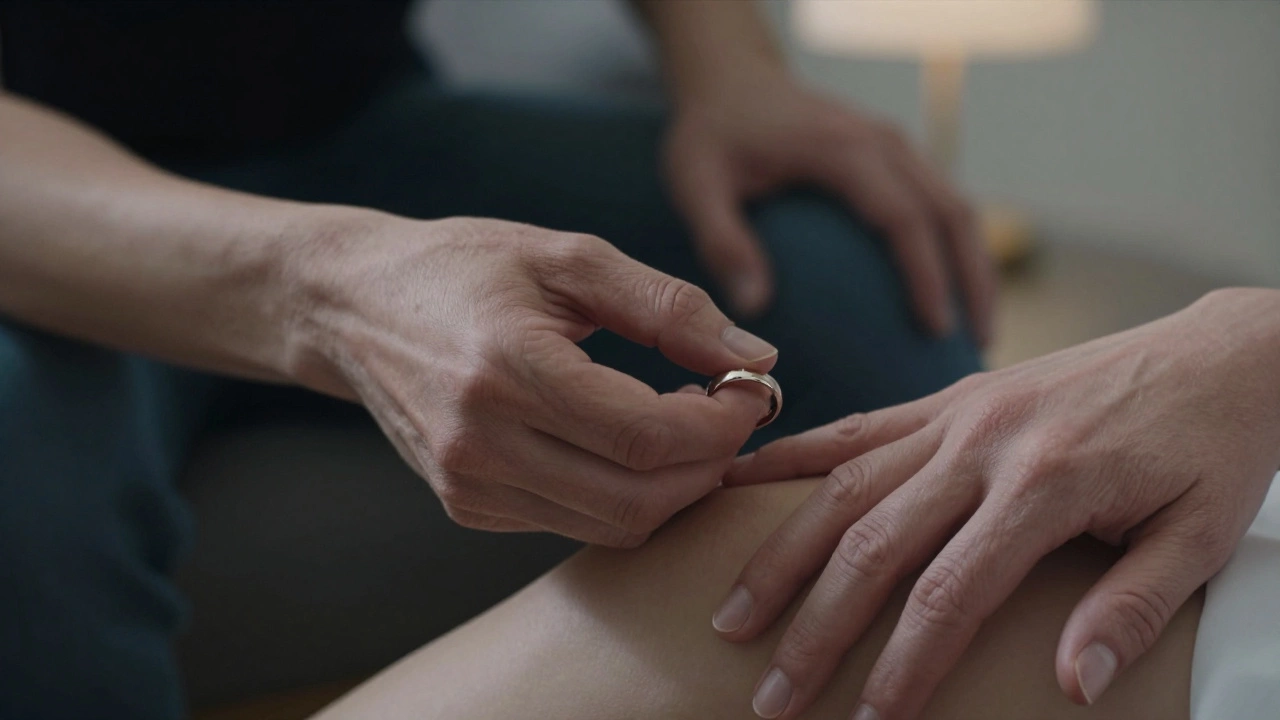
- Fidgeting with a ring or bracelet when discussing relationships? Often a self-soothing gesture, signaling discomfort.
- Hands tucked under thighs or behind the back? That’s a physical barrier-your body is trying to shut out the conversation.
- Open palms while talking about guilt? That’s rare. It often means you’re ready to be honest.
- Repeated hand-washing motions even when you’re not near water? Could point to unresolved shame or contamination fears.
These aren’t guesses. They’re patterns therapists see across hundreds of sessions. One therapist in Toronto tracked hand movements in 300 clients with anxiety disorders. She found that 78% of them showed consistent hand behaviors linked to specific emotional triggers-like covering the mouth when lying or touching the wrist when feeling powerless.
Why Your Hands Reveal More Than Your Words
Your brain doesn’t always let your mouth speak the truth. Especially when trauma is involved. Talking about abuse, loss, or rejection can be terrifying. So your body steps in. It says what you can’t-or won’t-say out loud.Think of your hands as a backup channel. When your mind shuts down from overwhelm, your hands keep talking. A person who says, “I’m fine,” but keeps twisting their wedding band? That’s not fine. A client who smiles and says, “It didn’t hurt,” while their fingers dig into their own forearm? That’s trauma.
Therapists don’t assume. They ask. “I noticed your hands kept moving when you talked about your mom. What was going on for you in that moment?” That’s how real healing begins-not by forcing words, but by gently following the body’s lead.
It’s Not About Being “Caught”
Some people worry their therapist is “reading” them like a book. That’s not how it works. Therapists aren’t mind readers. They’re observers. And they’re trained to notice what most people ignore.Think of it like this: if you’re walking down the street and someone’s posture changes when they see a dog, you notice. You don’t think they’re weird-you think, “Oh, they’re afraid of dogs.” Your therapist is doing the same thing, just with emotions.
And if you’re uncomfortable with the attention? Say so. A good therapist will pause, explain, and adjust. Therapy isn’t about being watched. It’s about being seen.
What You Can Do
You don’t need to control your hands. In fact, trying to stop fidgeting or keep them still can make things worse. Instead:- Notice your own hand movements. Do they change when you talk about certain topics?
- Don’t judge them. They’re not “bad” or “weird.” They’re clues.
- If you’re curious, ask your therapist: “What did you notice about my hands just now?”
- Use the moment to explore. “I realized I always touch my neck when I talk about work. Why do you think that is?”
One woman in Mumbai started noticing she rubbed her left thumb over her right palm every time she mentioned her father. She didn’t realize it until her therapist gently pointed it out. That tiny motion led to a breakthrough: she’d been holding onto guilt from age 12, when she blamed herself for her father’s illness. No one had ever asked her about her hands. But once they did, the door opened.

Not All Therapists Do This
It’s worth noting: not every therapist pays attention to body language. Some focus only on words. Others rely on questionnaires or cognitive techniques. But those who do notice nonverbal cues-especially hands-often see faster progress.Why? Because trauma lives in the body. Words can mask pain. But hands? They carry the memory. A trembling finger. A locked wrist. A sudden stillness. These aren’t distractions. They’re the real story.
If you’re in therapy and your therapist doesn’t mention your body, that’s okay. But if they do, don’t panic. It’s not creepy. It’s clinical. And it might be exactly what you need to heal.
Final Thought: Your Hands Are Part of You
They’ve held your first toy. They’ve waved goodbye. They’ve wiped tears. They’ve reached out-and pulled back.They’re not just tools. They’re storytellers. And in therapy, sometimes, they’re the only ones brave enough to speak.