Total Knee Replacement Recovery Timeline Calculator
Your Profile
Current Phase Assessment
Key Milestones for Your Phase:
Personalized Recovery Forecast
Expected Normal Walking
--
Months from surgeryCane-Free Estimate
--
Weeks from surgeryFull Confidence
--
Months from surgeryFactors Influencing Your Timeline:
⚠️ Important Reminder
This calculator provides general estimates based on typical recovery patterns. Individual results vary significantly. Always follow your surgeon's specific guidance and consult them if you experience unusual pain, swelling, or concerns about your progress.
Imagine finally getting rid of that grinding pain in your knee. You’ve waited months for Total Knee Replacement, also known as TKR or knee arthroplasty, a surgical procedure where damaged cartilage and bone are replaced with artificial implants. The surgery is done. But now comes the real question: when can you just walk? Not shuffle, not limp-just walk normally like you did ten years ago?
The short answer is that most people start walking with a cane within days, but achieving a completely natural, pain-free gait usually takes between three to six months. However, "normal" looks different for everyone. Some return to their daily routine in eight weeks, while others need up to a year to feel fully confident on uneven terrain. Let’s break down exactly what happens during each phase so you know what to expect.
Phase 1: The First Week - Movement Is Medicine
You might think resting is the best way to heal, but in orthopedic surgery, movement is actually critical. Within 24 hours of your surgery, you’ll likely be encouraged to stand up. This isn’t about going for a stroll around the block; it’s about proving your leg can bear weight.
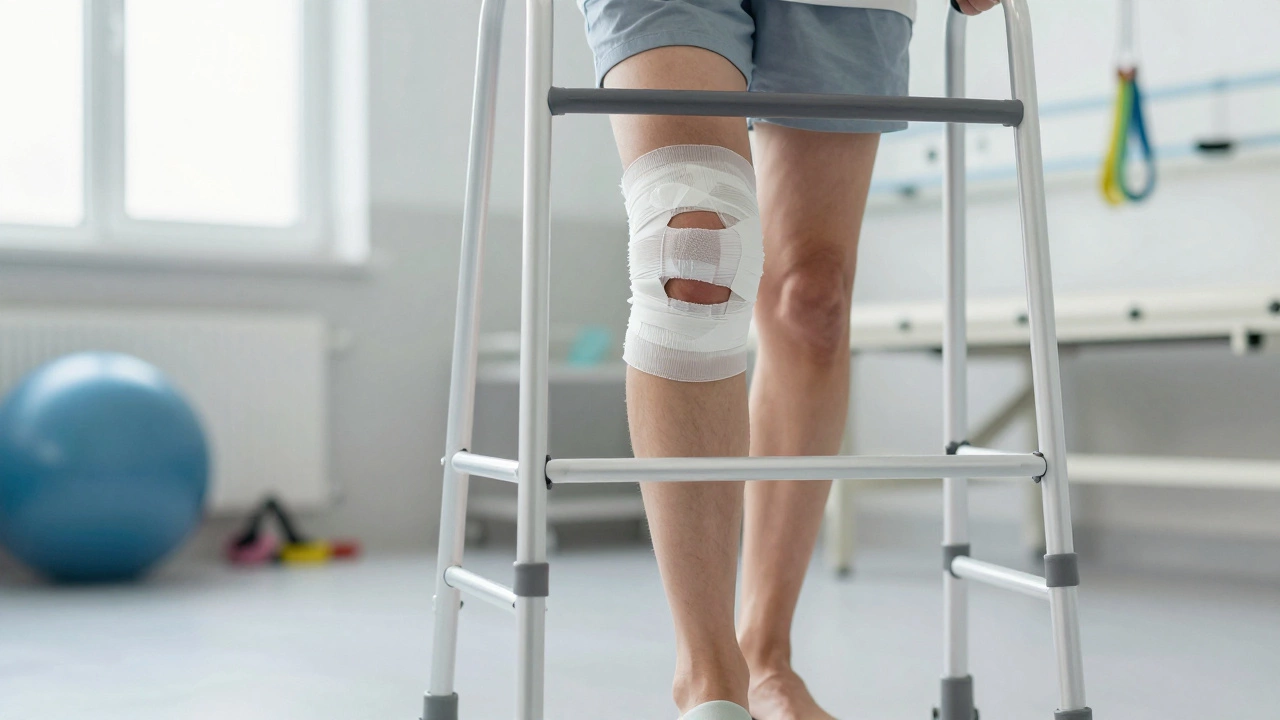
Physical Therapy begins almost immediately. Your therapist will help you use a Walker or crutches to take your first steps. The goal here is simple: prevent blood clots and get the joint moving before scar tissue forms. You won’t be walking normally yet. You’ll probably have a slight limp, and your knee will feel stiff and swollen. This is completely normal. Don’t panic if your leg feels heavy or if you’re limping slightly. The brain is still relearning how to coordinate the new joint.
During this week, focus on these milestones:
- Standing up from a chair without assistance (using armrests).
- Walking short distances inside your home with a walker.
- Achieving at least 90 degrees of knee bend, which allows you to sit comfortably.
Phase 2: Weeks 2-6 - Ditching the Cane
This is often the most frustrating phase because progress feels slow. By week two, many patients transition from a walker to a cane. By week four or six, many are ready to ditch the cane entirely. But "ditching the cane" doesn’t mean you’re walking normally yet.
Your gait-the pattern of your walking-will likely still be imperfect. You might swing your leg out wider than usual to avoid bending the knee too much, or you might lean slightly to one side. This is called a compensatory gait. It happens because your quadriceps muscles (the big muscles on the front of your thigh) are weak from disuse and surgery trauma.
To fix this, you need to strengthen those quads. Here’s a simple rule of thumb: if you can walk up a flight of stairs without holding the railing, you’re close to being cane-free. If you’re still using the cane, keep it on the opposite side of your new knee. This helps distribute weight evenly and prevents bad habits.
Phase 3: Months 2-3 - Finding Your Rhythm
By the third month, the swelling should have significantly decreased. Your knee range of motion should be nearing full extension (straightening out completely). This is crucial for a normal walk. If your knee doesn’t straighten all the way, you’ll always have a slight limp.
At this stage, you might feel like you’re walking normally on flat ground. You can go to the grocery store, drive to work, and handle daily chores without thinking about your knee. However, challenges remain. Uneven surfaces, hills, or long distances might still trigger stiffness or mild pain. This is where consistency in rehabilitation pays off.
Many patients make a mistake here: they stop formal physical therapy because they feel "good enough." But true normalization requires strengthening the supporting muscles, including the hamstrings and calves. Without this balance, the new joint wears out faster. Aim for low-impact activities like swimming or stationary cycling to build endurance without pounding the joint.

Phase 4: Months 4-6 - The New Normal
For the majority of patients, months four through six mark the point where walking feels truly natural. You no longer think about your step. You don’t check your knee every time you sit down. The limp is gone. The confidence is back.
However, "normal" has limits. While you can walk normally, high-impact activities like running or jumping are generally discouraged. The artificial implant is durable, but it’s not indestructible. Running puts excessive stress on the bone-implant interface, which can lead to loosening over time.
If you were an avid hiker before surgery, you might find yourself back on the trails by month five. But listen to your body. If you experience increased swelling after a hike, scale back. The goal is longevity of the implant, not pushing it to its absolute limit.
Factors That Speed Up or Slow Down Recovery
Not everyone follows the same timeline. Several factors influence how quickly you regain a normal gait:
| Factor | Impact on Recovery | Actionable Tip |
|---|---|---|
| Age | Older adults may recover slower due to muscle loss. | Focus on strength training earlier in rehab. |
| Premorbid Fitness | Fitter patients regain mobility faster. | Start pre-hab exercises before surgery if possible. |
| Surgical Technique | Minimally invasive approaches reduce initial pain. | Discuss approach options with your surgeon. |
| Compliance with PT | Skipping sessions delays progress significantly. | Treat PT appointments as non-negotiable medical care. |
| Weight Management | Higher BMI increases stress on the new joint. | Maintain a healthy diet to support healing. |
One common misconception is that pain equals damage. In the early weeks, some discomfort is expected as tissues heal. But sharp, stabbing pain could indicate a problem. Always communicate openly with your healthcare team. They can adjust your medication or therapy plan to keep you on track.

When to Worry About Your Gait
While some limp is normal in the beginning, certain signs warrant immediate attention. If you notice persistent swelling that doesn’t improve with elevation and ice, contact your doctor. Similarly, if your knee locks or gives way unexpectedly, it could signal a mechanical issue with the implant or surrounding ligaments.
Also, watch for changes in skin color or temperature around the incision site. Redness, warmth, or drainage could indicate an infection, which is a serious complication that requires prompt treatment. Early detection saves lives and preserves the success of your surgery.
Maintaining Your Progress Long-Term
Once you’ve achieved a normal gait, the work isn’t over. To keep your new knee functioning well for decades, you need to maintain muscle strength and flexibility. Incorporate regular low-impact exercise into your routine. Walking itself is excellent maintenance, but vary your activities to prevent boredom and overuse.
Consider joining a group fitness class designed for joint health. These classes provide social support and structured workouts tailored to your needs. Remember, the goal isn’t just to walk-it’s to live actively and independently for years to come.
Can I walk without a cane after 2 weeks?
It is uncommon to walk without any assistive device after only two weeks. Most patients still require a cane or walker at this stage to ensure stability and proper gait mechanics. Rushing to ditch the cane too early can lead to falls or developing bad walking habits that are hard to correct later.
Why does my knee still hurt after 3 months?
Some residual pain or stiffness can persist beyond three months, especially after prolonged activity or weather changes. However, significant or worsening pain should be evaluated by your surgeon. It could indicate inflammation, improper alignment, or other issues that need professional assessment.
Is it normal to limp occasionally after 6 months?
Occasional minor limping after fatigue or long walks can happen, but a consistent limp after six months suggests incomplete recovery or muscle imbalance. Consult your physical therapist to analyze your gait and identify areas needing targeted strengthening.
How much walking should I do daily?
Start with short, frequent walks (5-10 minutes) several times a day. Gradually increase distance as tolerated. By three months, aim for 30-60 minutes of total walking per day, broken into manageable segments. Listen to your body and rest if swelling increases.
Does age affect how fast I can walk normally?
Yes, older adults typically take longer to regain full strength and coordination due to natural muscle loss and slower tissue healing. However, with dedicated rehabilitation, even patients over 70 can achieve functional, near-normal walking patterns within six to twelve months.