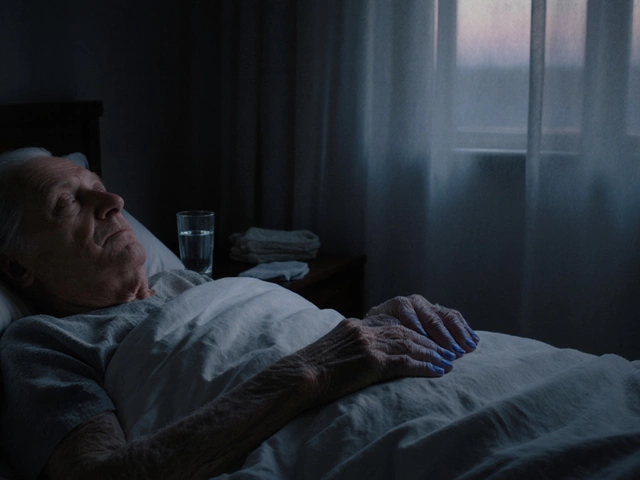
Most people know they should sleep early, but few know Ayurveda gives exact times for rest-not just "go to bed early," but when your body’s natural rhythms demand it. In Ayurveda, sleep isn’t a one-size-fits-all habit. It’s a ritual tied to the three doshas: Vata, Pitta, and Kapha. These energies move through your body in cycles, and sleeping at the wrong time can leave you tired even after eight hours. If you’re always waking up groggy, or struggling to fall asleep despite exhaustion, the problem might not be stress or screen time-it could be your sleep window.
The Ayurvedic Clock: How Your Body Moves Through the Day
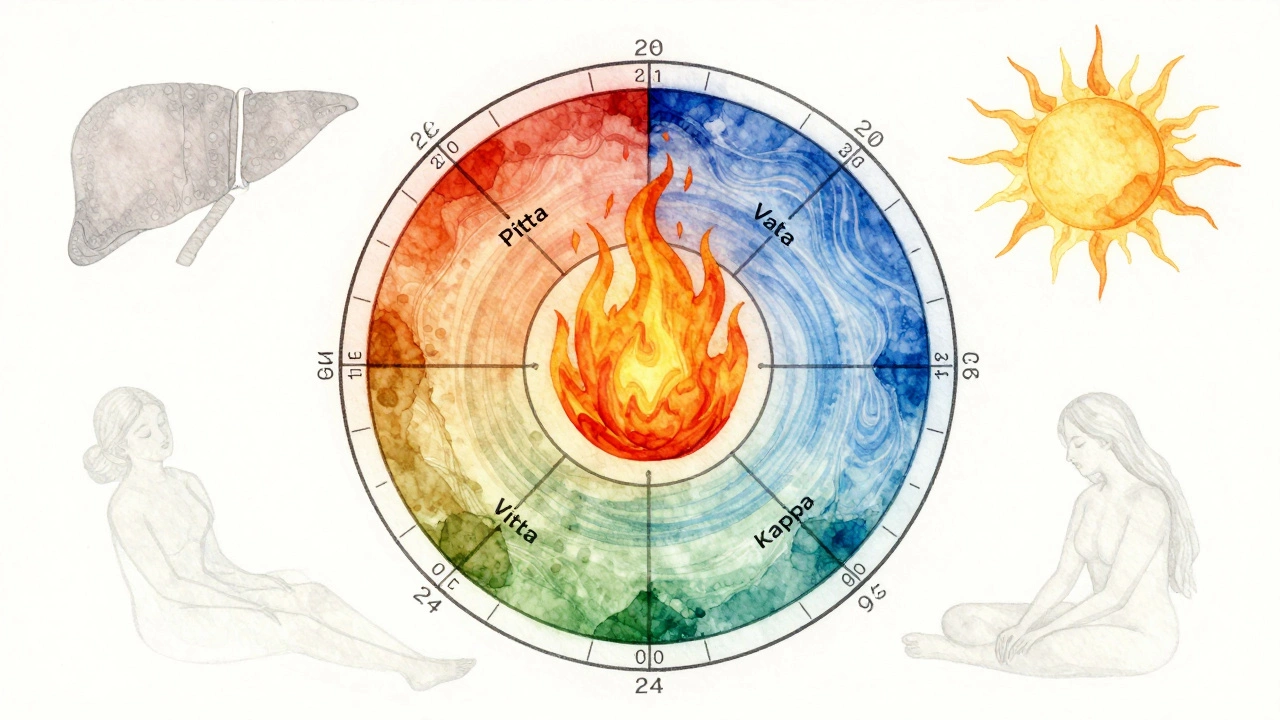
Ayurveda divides the 24-hour day into four-hour blocks, each ruled by one of the three doshas. These aren’t arbitrary. They match the natural rhythms of nature and your body’s internal processes. Think of it like a tide-your energy rises and falls with the doshas. When you align your sleep with these tides, rest becomes deep, restorative, and effortless.
From 2 a.m. to 6 a.m., Vata dominates. This is the time of lightness, movement, and clarity. It’s when your body cleanses, repairs tissues, and resets the nervous system. If you’re awake during this window, your mind races. You might toss and turn, replaying conversations or worrying about tomorrow. That’s Vata out of balance.
From 6 a.m. to 10 a.m., Kapha takes over. Heavy, slow, and grounding. This is the time your body naturally wants to wake up and move. If you’re still asleep after 10 a.m., you’re fighting Kapha. You’ll feel sluggish, foggy, and heavy all day-even if you slept 9 hours.
And then there’s Pitta, from 10 p.m. to 2 a.m. This is the most critical window for sleep. Pitta governs digestion, including the liver’s nightly detox. Your liver works hardest between 10 p.m. and 2 a.m. to process toxins, balance blood sugar, and regenerate cells. If you’re awake, scrolling, or eating late, you overload this system. You wake up with a bitter taste in your mouth, acne, or brain fog-not because of bad genes, but because you missed Pitta’s window.
The Ideal Sleep Window: 10 p.m. to 6 a.m.
Ayurveda doesn’t say "sleep when you’re tired." It says: sleep by 10 p.m. That’s the golden rule. Why? Because by 10 p.m., Pitta energy is peaking. Your body is ready to shift from doing to repairing. If you’re in bed by then, you fall asleep easily. Your digestion quiets. Your liver gets the quiet it needs to do its job.
Waking up by 6 a.m. is equally important. That’s when Kapha energy starts to rise. If you wake with the sun, you feel alert, light, and ready. You don’t need caffeine. Your body naturally releases cortisol to wake you up-not in a jolt, but like a gentle wave.
People who sleep after 11 p.m. often report:
- Difficulty falling asleep even when exhausted
- Waking up at 2 a.m. and being unable to fall back asleep
- Feeling tired all day despite long sleep
- Digestive issues, especially bloating or acid reflux
- Dark circles or dull skin
What If You Can’t Sleep by 10 p.m.?
Life isn’t perfect. Shift work, caregiving, or late-night responsibilities make 10 p.m. impossible for some. Ayurveda doesn’t demand perfection-it offers adjustments.
If you must sleep later, aim for no later than 11:30 p.m. But then, wake up by 6:30 a.m. at the latest. Don’t sleep past 7 a.m. That’s when Kapha becomes too heavy. You’ll feel weighed down, mentally slow, and emotionally stuck.
Here’s what to do if you’re stuck in a late-night cycle:
- Stop eating after 7 p.m. Heavy meals delay digestion and keep Pitta active.
- Turn off screens by 9 p.m. Blue light suppresses melatonin, making sleep harder.
- Drink warm milk with a pinch of nutmeg or ashwagandha powder 30 minutes before bed. It calms Vata and supports Pitta.
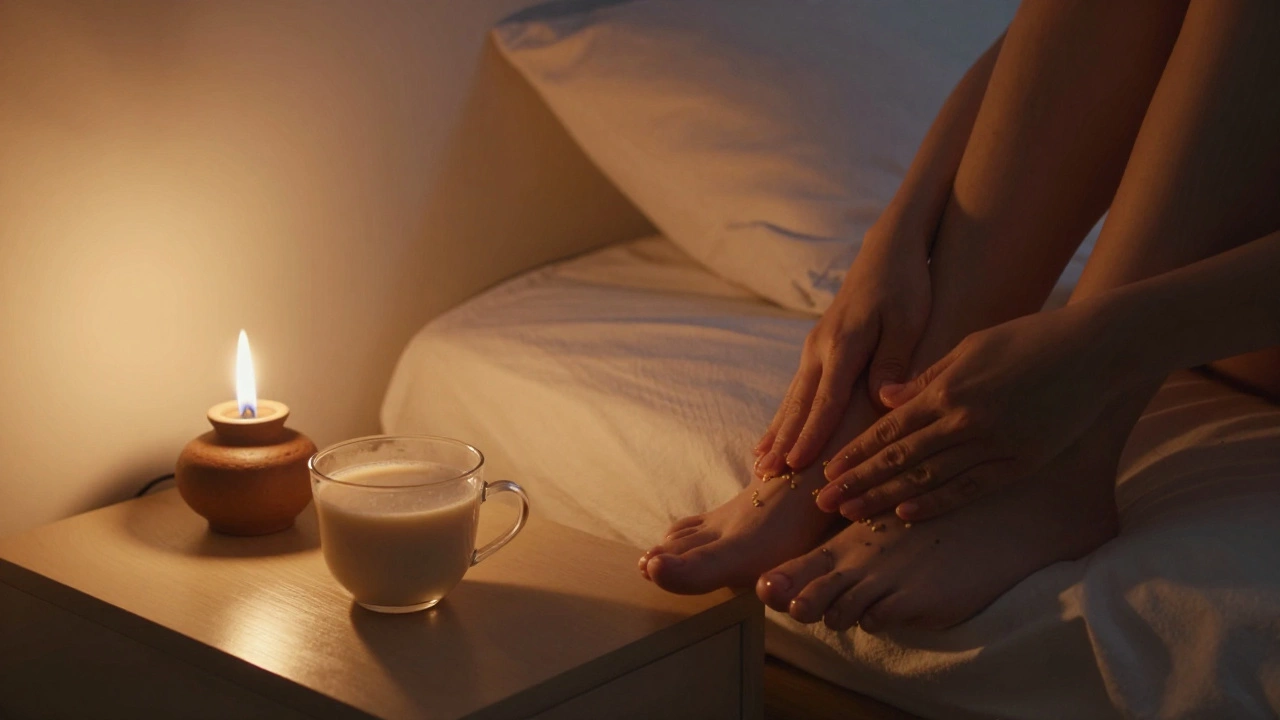
- Massage your feet with warm sesame oil before bed. This grounds Vata and signals your body it’s time to rest.
- Keep your bedroom cool and dark. Ayurveda says warmth and light stimulate activity-sleep needs stillness.
These aren’t "tips." They’re tools to gently shift your rhythm back into alignment.
How Your Dosha Affects Your Sleep Needs
Not everyone sleeps the same way. Your dominant dosha shapes your sleep pattern.
Vata-dominant people (thin, energetic, prone to anxiety) often struggle to fall asleep. Their minds race. They need routine. Go to bed by 9:45 p.m. Use grounding practices: warm oil massage, herbal teas, and a fixed bedtime. Avoid caffeine after noon.
Pitta-dominant people (focused, intense, driven) sleep well-until they don’t. Stress, anger, or overworking keeps them up past midnight. They need to cool down. Avoid spicy food at night. Sleep in a cool room. Practice calming breathwork (like Sheetali pranayama) before bed.
Kapha-dominant people (heavy, slow, grounded) can sleep 9-10 hours and still feel tired. They need to rise early-by 6 a.m. No snoozing. A brisk walk after waking helps shake off the heaviness. Skip heavy dinners. Eat light after 6 p.m.
Most people are a mix. But if you know your main dosha, you can fine-tune your sleep routine.
What Happens When You Ignore Ayurvedic Sleep Timing
Missing the 10 p.m. window doesn’t just make you tired. It triggers a cascade of imbalances.
When you sleep late:
- Your liver can’t detox properly → toxins build up → skin breaks out, headaches occur
- Blood sugar drops overnight → you crave sugar in the morning → insulin resistance grows
- Cortisol spikes at the wrong time → you feel anxious even when relaxed
- Immune function dips → you catch colds more often
- Deep sleep decreases → memory and focus suffer
A 2023 study in the Journal of Ayurveda and Integrative Medicine followed 450 adults who shifted their sleep to 10 p.m. for 30 days. 78% reported better sleep quality. 65% said their digestion improved. 52% noticed clearer skin. The biggest change? They stopped needing caffeine to get through the day.
This isn’t magic. It’s biology meeting ancient wisdom.
Real-Life Examples: What Works
Meet Priya, 38, from Pune. She worked late as a designer. Slept at 1 a.m. Woke up at 9 a.m. Always tired. Started sleeping by 10:30 p.m. (she couldn’t do 10), woke at 6:30 a.m. Cut out late-night snacks. Used warm milk with turmeric. In two weeks, she stopped waking up at 2 a.m. Her skin cleared. She didn’t need coffee before noon.
Raj, 52, from Chennai, had chronic acidity. His doctor said it was stress. Ayurveda pointed to late dinners and sleeping after 11 p.m. He started eating dinner by 7 p.m., turned off lights by 9:30 p.m., and slept by 10 p.m. His acid reflux vanished in 18 days.
These aren’t outliers. They’re people who listened to their body’s rhythm.

Why Modern Sleep Advice Falls Short
Western sleep science tells you to get 7-9 hours. Ayurveda says: when you sleep matters more than how long.
You can sleep 8 hours from 2 a.m. to 10 a.m. and still feel awful. Why? Because you missed Pitta’s detox window. You missed the body’s natural repair cycle. You’re sleeping in the wrong phase of your biological day.
Ayurveda doesn’t ignore science. It predates it. The timing of liver activity, melatonin release, and cortisol rhythm are now confirmed by modern chronobiology. Ayurveda just named it 5,000 years ago.
Start Tonight: Your Simple Sleep Reset
You don’t need to overhaul your life. Just make one change tonight.
Set a timer for 9:30 p.m. That’s your wind-down alarm. No screens. No work. No intense conversations.
Do this:
- Wash your feet with warm water.
- Drink a cup of warm water with a pinch of ginger or fennel.
- Do 5 minutes of deep breathing-inhale for 4 counts, hold for 2, exhale for 6.
- Be in bed by 10 p.m., lights out by 10:15 p.m.
Do this for 7 days. Don’t check your phone. Don’t measure results. Just show up.
If you wake up before your alarm on day 4 or 5, that’s your body telling you it’s healed. That’s the Ayurvedic rhythm returning.
Final Thought: Sleep Is Medicine
In Ayurveda, sleep is called "Nidra Veda." It’s not a luxury. It’s the most powerful medicine you have. No pill, no supplement, no therapy matches the healing power of sleeping in sync with your body’s natural clock.
You don’t need to be perfect. But if you want deep rest, lasting energy, and clear skin, you can’t ignore the 10 p.m. window. Your liver is waiting. Your nervous system is begging. Your body knows the time. It’s time to listen.
Is it okay to sleep after 11 p.m. in Ayurveda?
Ideally, no. Ayurveda recommends sleeping by 10 p.m. to align with Pitta’s detox window. If you must sleep later, don’t go past 11:30 p.m. and wake up by 6:30 a.m. at the latest. Sleeping after midnight disrupts liver function and increases Vata imbalance, leading to anxiety, poor digestion, and fatigue.
Why do I wake up at 2 a.m. every night?
Waking at 2 a.m. is a classic sign of Pitta imbalance. That’s when your liver is working hardest to detoxify. If you’re stressed, eating late, or consuming alcohol or spicy food, your body can’t complete this process. Your mind wakes up as a signal. Fix your dinner time, avoid stimulants after 7 p.m., and try a warm milk drink with nutmeg before bed.
Does Ayurveda recommend naps during the day?
Yes-but only for Kapha types and those who are exhausted. A short nap between 1 p.m. and 3 p.m. is acceptable. Avoid naps after 3 p.m., as they disrupt nighttime sleep. Vata and Pitta types should generally avoid naps, as they increase heaviness and imbalance.
What should I eat before bed according to Ayurveda?
Avoid heavy, fried, or spicy foods. A light snack like warm milk with a pinch of turmeric, ashwagandha, or nutmeg is ideal. You can also have a few soaked almonds or a small bowl of cooked apples with cinnamon. Eat at least 2-3 hours before bed to allow digestion to complete.
Can I use my phone before bed if I use night mode?
No. Even night mode doesn’t stop blue light from suppressing melatonin. Ayurveda advises complete screen avoidance after 9 p.m. Mental stimulation from messages, videos, or news keeps your mind active and delays sleep. Replace scrolling with reading a physical book, journaling, or listening to calming music.
How long does it take to adjust to Ayurvedic sleep timing?
Most people feel better within 3-5 days. Deep changes-like improved digestion, clearer skin, and consistent energy-take 2-3 weeks. The key is consistency. Don’t try to shift from 1 a.m. to 10 p.m. overnight. Move your bedtime 15 minutes earlier each night until you reach your goal.