Therapy Frequency & Cost Calculator
Imagine sitting in your therapist’s office every single week. You pay the fee, you make time in your calendar, and you open up about your struggles. After a few months, you might wonder: is this actually helping, or am I just paying for an hour of conversation that doesn’t change anything? This is a question many people ask themselves, especially when financial pressure mounts or life gets busy. The short answer is no, therapy once a week is not inherently "too much." In fact, it is the standard starting point for most effective treatments. However, whether it remains the right frequency depends entirely on where you are in your healing journey.
The idea that weekly therapy might be excessive often comes from a misunderstanding of how psychological change works. We tend to view mental health like physical fitness-assuming that once we hit a certain weight or run a certain distance, we can stop training. But mental health maintenance is more like learning a new language or mastering a musical instrument. It requires consistent practice, feedback, and gradual adjustment. If you stop practicing too soon, the skills fade. If you practice too intensely without rest, you burn out. Finding the sweet spot between these two extremes is what determines if weekly sessions are beneficial or burdensome.
Why Weekly Sessions Are the Industry Standard
When you first start seeing a Cognitive Behavioral Therapist who uses structured techniques to identify and change negative thought patterns, weekly appointments are almost always recommended. There is a specific clinical reason for this rhythm. Psychology relies on momentum. When you discuss a difficult topic, process an emotion, or learn a new coping mechanism, that neural pathway is fresh. Waiting three or four weeks for the next session allows those insights to cool down. By the time you return, you may have forgotten the nuance of the breakthrough or reverted to old habits.
Weekly contact also builds the therapeutic alliance. This is the trust bond between you and your provider. Research consistently shows that the quality of this relationship is one of the strongest predictors of successful outcomes. You cannot build deep trust sporadically. Showing up every week signals commitment. It creates a safe container where you know help is available within a predictable timeframe. For someone dealing with acute anxiety, depression, or trauma triggers, knowing there is a safety net just seven days away provides significant psychological relief.
Consider the alternative. If you see a therapist only once a month, you are essentially managing your mental health in isolation for twenty-three days out of thirty. During that gap, stressors accumulate. Small worries grow into large crises. When you finally sit down for your session, you spend the entire hour triaging emergencies rather than doing deep, transformative work. Weekly sessions prevent this accumulation effect by allowing for regular course corrections.
When Weekly Therapy Might Feel Like "Too Much"
Despite the benefits, there are scenarios where weekly therapy feels unsustainable or counterproductive. Recognizing these signs early can save you money and frustration. The most common reason people feel weekly therapy is "too much" is financial strain. In many regions, including parts of India and the US, out-of-pocket costs for private therapy can range from $50 to $200 per session. Over a year, this adds up to thousands of dollars. If paying for therapy causes you significant stress, sleeplessness, or anxiety about bills, then the treatment itself is becoming a source of harm. In this case, the frequency is indeed too much for your current resources, regardless of its clinical efficacy.
Another sign is dependency. Some individuals use therapy as their primary coping mechanism, avoiding real-world problems because they know they can vent about them later. If you find yourself delaying difficult conversations with family or bosses until your next appointment, you might be leaning too heavily on the therapist. Healthy therapy aims to make you independent, not reliant. If you leave every session feeling worse or more confused than before, or if you feel unable to function without immediate professional validation, it might be time to adjust the approach.
Additionally, the stage of treatment matters. If you have been in therapy for two years and your symptoms are stable, continuing weekly sessions might be overkill. Maintenance phase therapy often shifts to bi-weekly or monthly check-ins. Sticking rigidly to a weekly schedule when you no longer need intensive support can lead to stagnation. You might be rehearsing old problems instead of solving new ones. This is known as "therapeutic drift," where the routine becomes more important than the results.
Factors That Influence the Ideal Frequency
Determining the right schedule isn't a one-size-fits-all calculation. Several variables play a crucial role in deciding if you should stay at weekly, move to bi-weekly, or increase to twice weekly. Understanding these factors helps you advocate for yourself during sessions.
| Factor | Recommended Frequency | Reasoning |
|---|---|---|
| Acute Crisis | Twice weekly or daily (initially) | High risk of self-harm, severe panic attacks, or recent traumatic event requires immediate stabilization and constant monitoring. |
| Moderate Depression/Anxiety | Weekly | Standard pace for building skills, processing emotions, and maintaining accountability without overwhelming the client. |
| Maintenance Phase | Bi-weekly or Monthly | Symptoms are managed; focus shifts to prevention and occasional guidance. Reduces cost and time commitment. |
| Life Transitions | Weekly (temporary) | Grief, divorce, job loss, or relocation create temporary spikes in stress requiring focused support for 3-6 months. |
| Personal Growth | Monthly or As-needed | No clinical diagnosis; focus is on self-exploration, career coaching, or relationship dynamics. Less intensive structure needed. |
Your specific diagnosis also dictates frequency. Conditions like Borderline Personality Disorder (BPD) or severe PTSD often require more frequent contact initially to manage emotional dysregulation. Conversely, mild situational anxiety might resolve in eight to twelve weekly sessions. If you are undergoing medication management alongside therapy, coordination with a psychiatrist might necessitate more frequent check-ins to monitor side effects and dosage adjustments.

Alternatives to Strict Weekly Scheduling
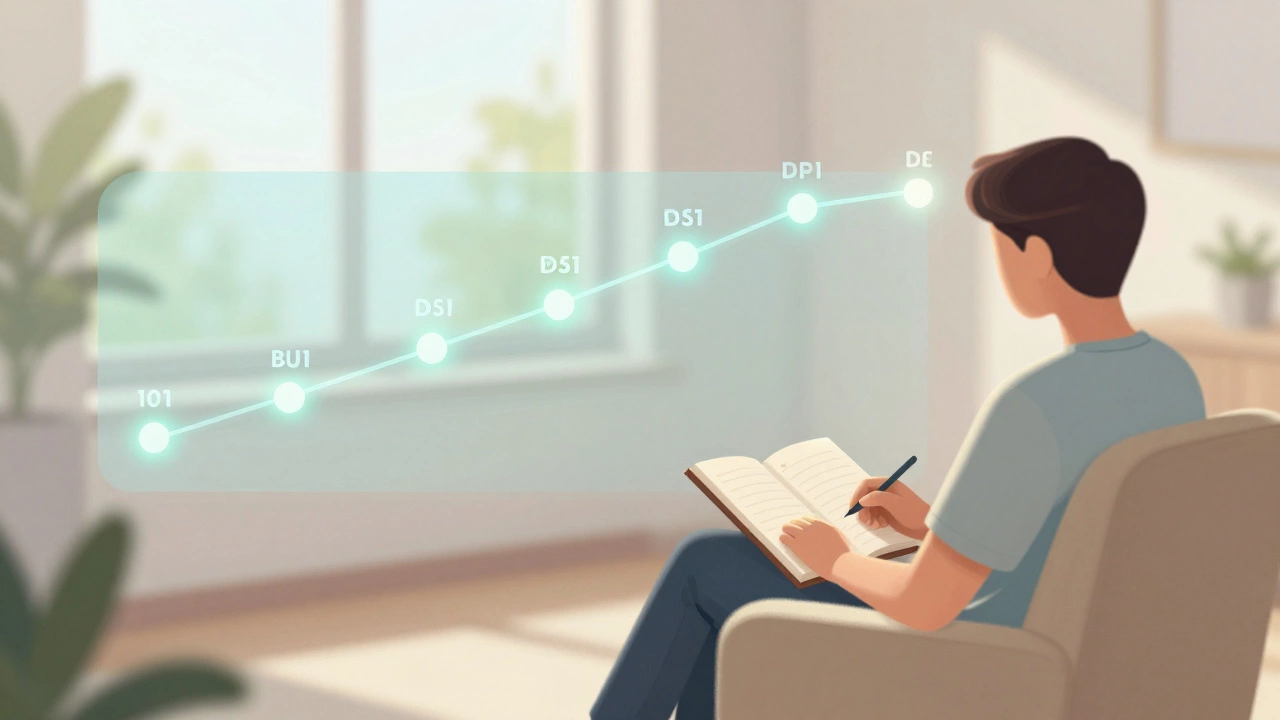
If weekly therapy feels like too much financially or logistically, you don't have to quit entirely. Flexibility is key to long-term adherence. One popular model is the "tapering" approach. You start with weekly sessions for the first month to establish rapport and set goals. Then, you move to bi-weekly sessions for the next two months. Finally, you shift to monthly check-ins. This gradual reduction helps you test your independence while still having a safety net.
Another option is group therapy. Instead of paying for an hour of individual attention, you join a group of five to ten people facing similar issues. Group therapy is often significantly cheaper and provides diverse perspectives. While it lacks the one-on-one depth, it offers community support and reduces feelings of isolation. Many therapists recommend combining one individual session every other week with a weekly group session to balance cost and benefit.
Technology has also changed the landscape. Digital therapeutics and AI-driven mental health apps can provide daily micro-interventions, mood tracking, and cognitive exercises between sessions. These tools don't replace human connection but can fill the gaps. If you use a reputable app for daily practice, you might find that bi-weekly human therapy is sufficient to keep you on track. Always consult your therapist before reducing frequency to ensure you are using these tools correctly.
How to Discuss Frequency With Your Therapist
Many clients hesitate to bring up scheduling changes because they fear disappointing their therapist or being judged as "not trying hard enough." This is a misconception. A good therapist wants you to succeed within your means. They are professionals, not friends expecting loyalty. Bringing up the frequency is a collaborative decision, not a confrontation.
Start by stating your observation. Say something like, "I’ve noticed that my anxiety levels have stabilized, and I’m wondering if we could try spacing our sessions out to every two weeks." Or, "The current cost is becoming difficult for me, and I’d like to explore options that fit my budget better." Most therapists will welcome this conversation. It shows self-awareness and proactive management of your care.
Be prepared for a trial period. Your therapist might suggest trying bi-weekly sessions for four weeks and then reassessing. This data-driven approach removes emotion from the decision. If you struggle during the gap, you can return to weekly. If you thrive, you can continue tapering. Transparency is essential. If you miss sessions or cancel frequently due to avoidance, tell your therapist. They can help you understand the underlying resistance rather than just adjusting the calendar.

Signs You Should Increase Frequency
While many worry about doing "too much," some do too little. Ignoring warning signs can lead to relapse or worsening conditions. If you experience a sudden increase in panic attacks, suicidal thoughts, or inability to perform daily tasks, weekly therapy might suddenly become insufficient. In these cases, increasing to twice weekly or seeking emergency psychiatric care is necessary.
Also, watch for stagnation. If you have been seeing a therapist weekly for six months and feel exactly the same as when you started, the issue might not be frequency but compatibility or modality. Sometimes, switching from talk therapy to Eye Movement Desensitization and Reprocessing (EMDR) or Dialectical Behavior Therapy (DBT) yields faster results. Before quitting, discuss the lack of progress with your provider. They may refer you to a specialist who uses different techniques better suited to your needs.
Financial Strategies for Sustainable Therapy
Cost is the biggest barrier to consistent therapy. If weekly sessions are too expensive, consider sliding scale clinics. Many non-profit organizations and university training centers offer services at reduced rates based on income. In Bangalore, several NGOs and government initiatives provide low-cost mental health support. Another strategy is utilizing Employee Assistance Programs (EAPs). Many companies offer a limited number of free therapy sessions through insurance partnerships. Check with your HR department to see if this benefit exists.
Insurance coverage varies widely. In India, mental health parity laws are evolving, and some private insurers now cover outpatient therapy. Verify your policy details. If you are abroad, look into telehealth platforms that offer subscription models. These often cost less than traditional hourly rates and provide access to licensed providers globally. Remember, the goal is consistency, not necessarily the most expensive provider. A moderately priced therapist you see regularly is far more effective than an elite expert you see once a quarter.
Is it normal to feel guilty for reducing therapy frequency?
Yes, it is very common. Many clients associate high frequency with high effort. However, reducing frequency is a sign of progress, not failure. It indicates you have internalized the skills and no longer need constant external support. Discuss these feelings with your therapist to process any underlying fears of abandonment or inadequacy.
Can I switch from weekly to monthly therapy immediately?
It depends on your stability. If you have been in therapy for a long time and your symptoms are minimal, jumping to monthly might be fine. However, if you are recently diagnosed or experiencing moderate symptoms, a sudden drop in support can lead to relapse. A gradual taper (weekly to bi-weekly to monthly) is generally safer and allows both you and your therapist to monitor your coping abilities.
What if my therapist insists on weekly sessions but I can't afford it?
This is a boundary issue. You have the right to choose a treatment plan that fits your financial reality. Politely explain your constraints. If the therapist refuses to adjust or offer alternatives (like group therapy or referrals to lower-cost providers), it may be time to find a new provider. Therapy should be accessible, not exploitative.
Does online therapy require the same frequency as in-person?
Generally, yes. The medium (video vs. face-to-face) does not change the clinical need for consistency. However, some studies suggest that online therapy can feel less intimidating, potentially allowing for deeper work in fewer sessions. Still, rely on your symptom severity and therapist's recommendation rather than assumptions about the platform.
How do I know if I'm ready to stop therapy altogether?
Readiness involves several markers: you can identify triggers without spiraling, you use coping strategies automatically, and you have a strong support network outside of therapy. Most importantly, you and your therapist agree that the goals have been met. Ending therapy should be a planned process, not an abrupt cessation, to ensure you have a relapse prevention plan in place.