Vitamin D Status Checker & Guide
Enter Your Blood Test Result
Enter the result from your 25-hydroxy vitamin D test.
Enter your Vitamin D level to see your status and recommended actions.
Why This Matters
The Search for the Ultimate Supplement
Walk into any health store in Bangalore or browse online retailers, and you will see aisles filled with bottles promising better sleep, more energy, and longer life. From ashwagandha to omega-3s, the choices are endless. But if you had to pick just one-the absolute most critical supplement for human health-what would it be? The answer isn't a trendy nootropic or a exotic root extract. It is something your body actually makes itself, yet fails to get enough of for billions of people.
That title belongs to Vitamin D. In the medical and nutritional community, Vitamin D is often referred to as the "king of supplements" because its impact goes far beyond simple nutrition. Unlike other vitamins that act merely as fuel, Vitamin D functions more like a hormone. It regulates over 1,000 genes in your body, influencing everything from how your bones absorb calcium to how your immune system fights off viruses. Without adequate levels, your body struggles to maintain basic structural integrity and defense mechanisms.
Why does this matter so much? Because despite living in sunny parts of the world, massive portions of the global population are deficient. This paradox makes understanding Vitamin D not just interesting, but essential for anyone looking to optimize their health without relying on medication.
Why Vitamin D Reigns Supreme
To understand why Vitamin D holds the crown, we need to look at what it actually does inside your body. Most people think of it as just "the sunshine vitamin" that helps prevent rickets (a bone softening disease). While that is true, its role is much broader.
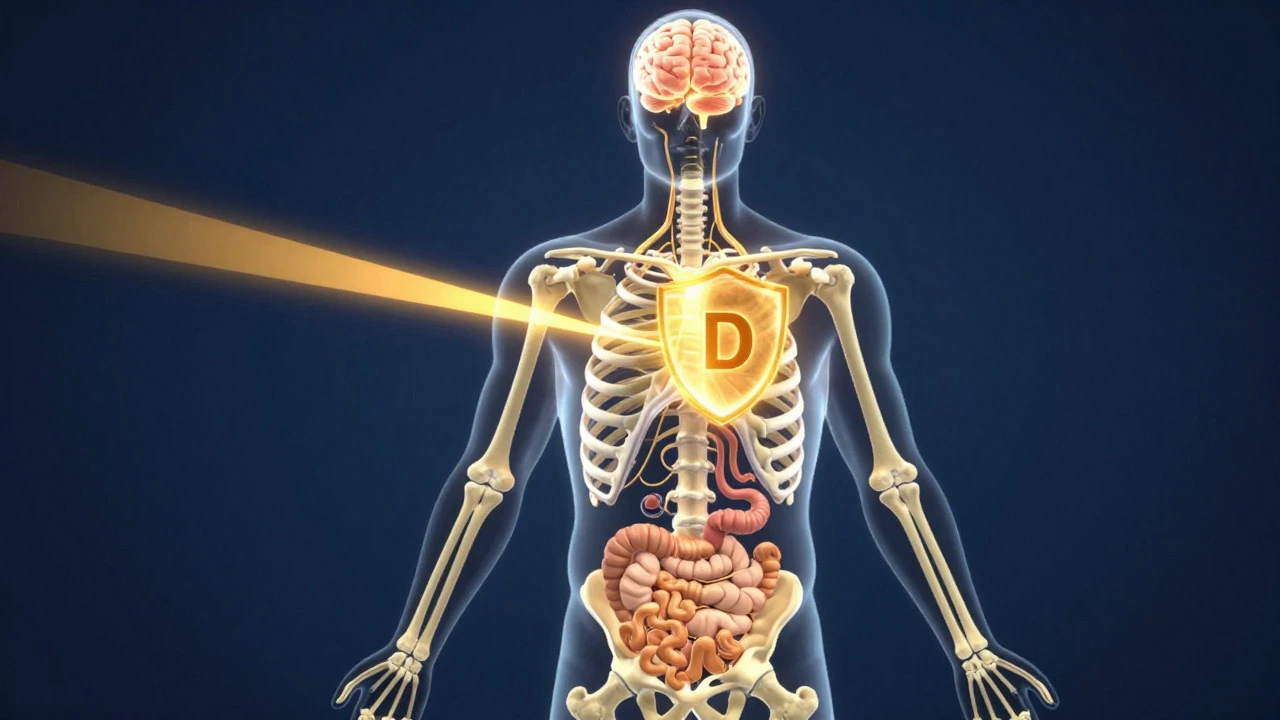
Vitamin D acts as a master switch for gene expression. When Vitamin D binds to receptors in your cells, it tells those cells what proteins to produce. This process affects:
- Bone Density: It enables your intestines to absorb calcium effectively. Without it, you could eat all the dairy you want, but your bones wouldn't get the minerals they need.
- Immune Function: It activates T-cells, which are the soldiers of your immune system. Studies have consistently shown that low Vitamin D levels correlate with higher susceptibility to respiratory infections.
- Mood Regulation: Receptors for Vitamin D are found in areas of the brain involved in mood control. Deficiency is strongly linked to seasonal affective disorder and general depression.
- Muscle Strength: Low levels are associated with muscle weakness and an increased risk of falls, especially in older adults.
No other single nutrient influences such a wide variety of bodily systems. Magnesium supports hundreds of reactions, yes, but Vitamin D dictates the *structure* and *defense* of the entire organism. That is why experts call it the king.
The Global Deficiency Crisis
If Vitamin D is so important, why do so many people lack it? The irony is that our modern lifestyle works against us. Humans evolved to get Vitamin D by exposing their skin to sunlight. However, several factors have disrupted this natural cycle:
- Sunscreen Use: While protecting your skin from UV damage is crucial, high-SPF sunscreens can block up to 95% of Vitamin D production. Many people apply sunscreen immediately upon going outside, cutting off their primary source.
- Indoor Living: We spend approximately 90% of our time indoors. Between offices, homes, and cars, direct sun exposure is minimal for most workers.
- Geography and Season: If you live north of the 37th parallel (which includes most of Europe, northern India, and large parts of the US), the sun is too weak during winter months to trigger Vitamin D synthesis. Your body simply cannot make it from October to March in these regions.
- Skin Pigmentation: Melanin, which gives skin its color, acts as a natural sunscreen. People with darker skin tones require significantly longer sun exposure to produce the same amount of Vitamin D as those with lighter skin. This is a biological adaptation to high-sun environments, but it becomes a disadvantage in urban, indoor-centric lifestyles.
In cities like Bangalore, where the sun shines year-round, deficiency is still rampant due to pollution blocking UV rays and cultural preferences for staying indoors during peak heat. A study published in the Journal of Clinical and Diagnostic Research highlighted that even in sunny Indian metros, over 60% of adults suffer from some degree of Vitamin D insufficiency.
Signs You Might Be Deficient
Vitamin D deficiency is often called a "silent epidemic" because the symptoms are vague and easily mistaken for other issues. You might feel tired and assume you just need more coffee. You might experience joint pain and blame it on aging. Here are the specific red flags to watch for:
- Persistent Fatigue: Feeling exhausted even after a full night's sleep is a classic sign. Your muscles and nerves aren't getting the support they need.
- Bone and Back Pain: Chronic lower back pain or deep bone ache can indicate poor mineralization.
- Frequent Illnesses: Catching every cold or flu that goes around suggests your immune system is underperforming.
- Mood Swings: Unexplained anxiety or low mood, particularly in winter months, may be linked to low Vitamin D.
- Slow Wound Healing: If cuts and bruises take forever to heal, your body’s inflammatory response might be compromised.
The only way to know for sure is through a blood test. Specifically, you need a 25-hydroxy vitamin D test. This measures the total amount of Vitamin D circulating in your blood. Anything below 20 ng/mL (50 nmol/L) is generally considered deficient, while levels between 20-30 ng/mL are insufficient. Optimal health usually requires levels above 30 ng/mL, with many functional medicine practitioners aiming for 40-60 ng/mL.
Sources: Sun, Food, or Pills?
So, how do you get enough? Let’s break down the three main sources.
1. Sunlight
This is the most efficient method. For most people, 10-30 minutes of midday sun exposure on arms, legs, and face, two to three times a week, is sufficient. No sunscreen should be applied during this short window to allow UVB rays to penetrate. However, this varies wildly based on skin tone, age, and location. As we age, our skin becomes less efficient at producing Vitamin D, making supplementation more necessary for seniors.
2. Diet
Honestly, food alone is rarely enough to correct a deficiency. Very few foods naturally contain significant amounts of Vitamin D. The best sources include:
- Fatty fish like salmon, mackerel, and sardines
- Beef liver
- Egg yolks
- Mushrooms exposed to UV light
Fortified foods like milk, orange juice, and cereals help, but the amounts are usually small. You would need to eat enormous quantities of fatty fish daily to meet optimal levels, which is impractical for most diets.
3. Supplementation
This is where the "king" status really comes into play. Because diet and sun are unreliable, supplements are the most consistent way to maintain healthy levels. There are two forms: Vitamin D2 (ergocalciferol) and Vitamin D3 (cholecalciferol).
Choose D3. Multiple studies show that Vitamin D3 raises blood levels more effectively and maintains them longer than D2. D3 is derived from sheep’s wool (lanolin) and is identical to what your body produces from sun. D2 is plant-based and less potent. Always look for "Cholecalciferol" on the label.

How Much Do You Need?
The Recommended Dietary Allowance (RDA) set by many governments is 600-800 IU (International Units) per day. However, many endocrinologists argue this is too low to maintain optimal levels, especially for deficient individuals. Common maintenance doses range from 1,000 to 2,000 IU daily. For those with severe deficiency, doctors may prescribe higher doses (5,000 IU or more) for a short period.
It is also crucial to pair Vitamin D with Magnesium and Vitamin K2. Magnesium is required to convert Vitamin D into its active form in the body. Without enough magnesium, taking Vitamin D can actually deplete your magnesium stores, leading to cramps or heart palpitations. Vitamin K2 ensures that the calcium absorbed by Vitamin D goes to your bones and teeth, rather than calcifying your arteries. Think of it as a team effort: Vitamin D opens the door for calcium, and K2 directs it to the right room.
| Source | Average Daily Intake | Reliability | Best For |
|---|---|---|---|
| Sunlight (15 mins) | 1,000 - 10,000 IU* | Variable (Weather/Skin) | General maintenance in sunny climates |
| Fatty Fish (Salmon) | 400 - 800 IU per serving | Low (Dietary limits) | Dietary inclusion, not correction |
| Vitamin D3 Supplement | 1,000 - 5,000 IU | High (Consistent dose) | Correcting deficiency and maintenance |
| Vitamin D2 Supplement | 1,000 - 5,000 IU | Moderate (Less effective) | Vegan options (if D3 not available) |
*Note: Sun-derived Vitamin D is self-regulating; your body stops producing it once levels are sufficient, reducing toxicity risk compared to supplements.
Safety and Toxicity Concerns
Can you take too much? Yes, but it is difficult. Vitamin D is fat-soluble, meaning it stores in your body’s fat tissues. Unlike Vitamin C, which you pee out if you take too much, Vitamin D accumulates. Toxicity usually occurs only at very high doses (above 10,000 IU daily for extended periods) without medical supervision. Symptoms of toxicity include nausea, vomiting, weakness, and kidney stones due to excessive calcium in the blood.
For most people, sticking to 1,000-2,000 IU daily is perfectly safe. However, because individual needs vary based on weight, skin color, and baseline levels, getting a blood test before starting high-dose supplementation is the smartest move. It prevents guessing and ensures you are treating the actual problem.
Conclusion: Claiming Your Health
Vitamin D earns its title as the king of supplements not because it is magical, but because it is fundamental. It bridges the gap between our ancient biology and our modern, indoor lives. Ignoring it means risking bone health, immune resilience, and mental well-being. By prioritizing Vitamin D-through sensible sun exposure, targeted diet, and appropriate D3 supplementation-you address one of the most common and impactful health gaps in the world today. Check your levels, adjust your intake, and give your body the foundation it needs to thrive.
Is Vitamin D3 better than D2?
Yes, Vitamin D3 (cholecalciferol) is superior. Clinical trials show that D3 raises and maintains blood levels of 25-hydroxyvitamin D more effectively than D2 (ergocalciferol). D3 is also the same form your body produces naturally when exposed to sunlight.
How long does it take for Vitamin D supplements to work?
It typically takes 2 to 3 months of consistent supplementation to see significant changes in blood levels. Since Vitamin D is stored in fat, it builds up gradually. You may notice improved energy or mood sooner, but optimal bone and immune benefits require sustained adequate levels.
Should I take Vitamin D with food?
Yes, absolutely. Vitamin D is fat-soluble, meaning it absorbs best when taken with a meal containing dietary fat. Taking it with breakfast or lunch that includes eggs, avocado, or nuts can significantly improve absorption compared to taking it on an empty stomach.
Can dark-skinned people get enough Vitamin D from the sun?
They can, but it takes longer. Melanin reduces the skin's ability to produce Vitamin D from UVB rays. Individuals with darker skin may need 3 to 5 times longer sun exposure than those with fair skin to generate the same amount of Vitamin D. In non-tropical regions or during winter, supplementation is often necessary regardless of skin tone.
Do I need Vitamin K2 with my Vitamin D?
It is highly recommended. Vitamin D increases calcium absorption, but Vitamin K2 directs that calcium into bones and teeth and keeps it out of arteries and kidneys. Without K2, high doses of Vitamin D could potentially lead to vascular calcification. Look for supplements that combine D3 and K2 (MK-7 form) for synergistic benefits.