Cancer Survival & Treatment Explorer
Select a cancer type below to view detailed survival statistics, primary treatments, and key advantages based on localized stage data.
Testicular Cancer
>99% Localized SurvivalYou hear the word "cancer" and your stomach drops. It’s a terrifying diagnosis that feels like a life sentence. But here’s the thing: not all cancers are created equal. Some are aggressive sprinters, while others are slow marathons you can actually win with relative ease. If you’re asking, "What is the easiest cancer to fight?", you’re looking for hope backed by hard data. The answer isn’t just about luck; it’s about biology, timing, and how well our medical tools match the enemy.
The Testicular Cancer is widely considered one of the most treatable forms of the disease. It is a type of cancer that develops in the testicles, which are part of the male reproductive system. Why is it so easy to fight? Mostly because it tends to strike younger men (ages 15-35) who are generally healthy enough to withstand strong treatments, and it responds incredibly well to chemotherapy and radiation. The five-year survival rate for localized testicular cancer is over 99%. That’s not a typo. Ninety-nine percent.
Why Testicular Cancer Tops the List
Let’s look at why this specific cancer is so manageable. First, the anatomy helps. The testes are external, making lumps easier to spot than tumors buried deep in the pancreas or lungs. Second, the cells involved-germ cells-are highly sensitive to platinum-based chemotherapy drugs like cisplatin. Even if the cancer spreads, these drugs often wipe it out completely.
Consider the case of Lance Armstrong. His advanced metastatic testicular cancer was caught late, yet he survived and returned to professional cycling. While his story is famous, it highlights a broader truth: even advanced cases have high cure rates compared to other solid tumors. For early-stage detection, surgery alone (removing the affected testicle) is often curative. No chemo, no radiation, just recovery.
Thyroid Cancer: The Slow-Moving Threat
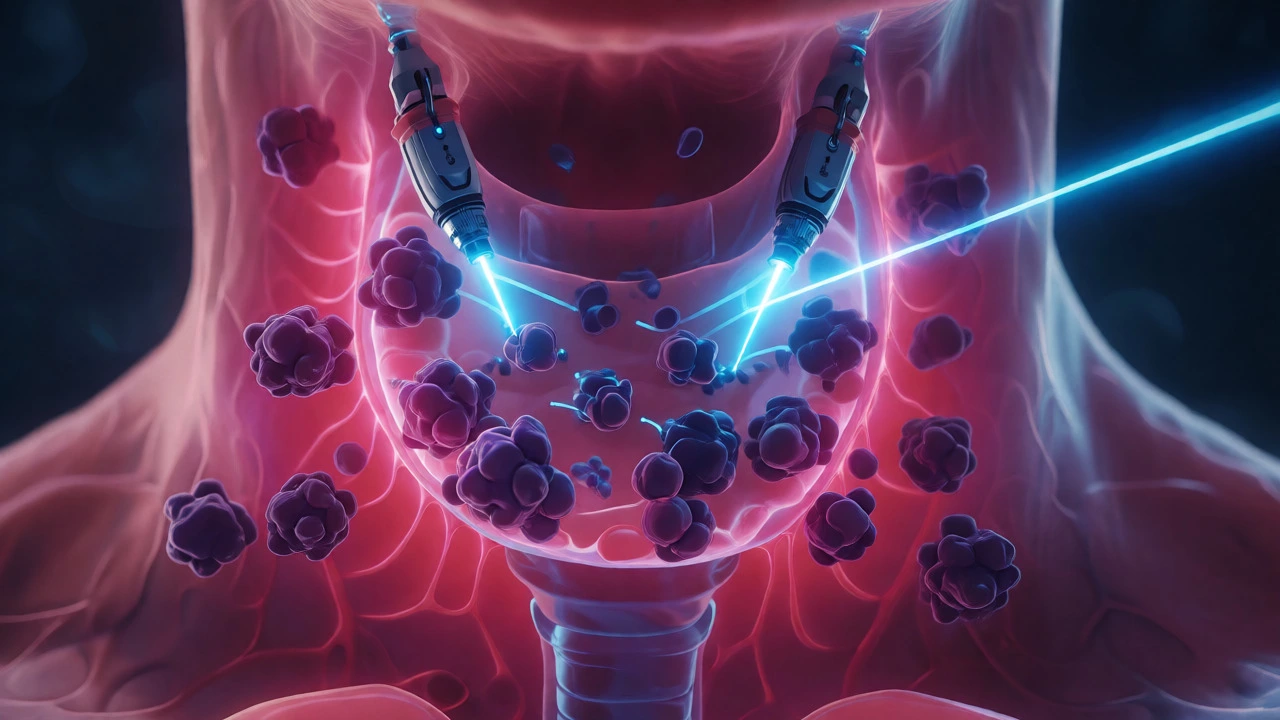
If testicular cancer is the sprinter, Thyroid Cancer is the tortoise. It is a cancer that begins in the thyroid gland, located at the base of the neck. Most types, particularly Papillary Thyroid Carcinoma, grow very slowly. Many people live with small thyroid nodules for years without them becoming dangerous.
The treatment protocol is straightforward: surgical removal of the thyroid (thyroidectomy) followed by radioactive iodine therapy to mop up any remaining cells. Because the body absorbs iodine naturally, doctors can target residual cancer cells precisely without damaging surrounding tissues as much as traditional chemo does. The five-year survival rate for localized thyroid cancer is nearly 100%, and even for distant spread, it hovers around 78%.
One caveat: thyroid cancer is often over-diagnosed. We find tiny, harmless tumors during ultrasounds done for unrelated reasons. This leads to unnecessary anxiety and sometimes overtreatment. But from a survival standpoint? It’s arguably the least lethal common cancer.
Breast Cancer: Early Detection Changes Everything
You might be surprised to see Breast Cancer on this list. It’s the most diagnosed cancer in women worldwide. But "common" doesn’t mean "deadly." Thanks to widespread screening mammograms, we catch many breast cancers at Stage I or II. When confined to the breast, the five-year survival rate exceeds 99%.
Treatment has evolved dramatically. Instead of radical mastectomies (removing the whole breast), surgeons now perform lumpectomies (removing just the tumor) paired with radiation. Hormone therapies like tamoxifen block estrogen, which fuels certain breast cancers, effectively starving the tumor. Targeted therapies like Herceptin attack HER2-positive cells specifically. The variety of tools available means oncologists can tailor a plan that minimizes side effects while maximizing cure chances.
However, not all breast cancers are easy. Triple-negative breast cancer lacks hormone receptors and HER2 proteins, making it harder to treat. So, when we say breast cancer is "easy," we mean the majority of cases detected early through routine screening.
Prostate Cancer: The Indolent Giant
Prostate Cancer is a cancer that occurs in the prostate, a small walnut-shaped gland in males that produces seminal fluid. It’s the second most common cancer in men. Here’s the paradox: many men die *with* prostate cancer, not *from* it. Autopsy studies show that up to 80% of men in their 80s have some form of prostate cancer cells, yet never experienced symptoms.
This indolent nature makes it "easy" in terms of survival. Low-risk prostate cancer often requires only "active surveillance"-regular monitoring via PSA blood tests and MRI scans-rather than immediate surgery or radiation. If intervention is needed, robotic-assisted surgery and precision radiation offer high cure rates with manageable side effects. The five-year survival rate for localized prostate cancer is essentially 100%.
Comparing the "Easiest" Cancers
To help you visualize the differences, here’s a breakdown of key metrics for these highly survivable cancers. Note that survival rates depend heavily on the stage at diagnosis.
| Cancer Type | 5-Year Survival Rate (Localized) | Primary Treatment | Detection Method | Key Advantage |
|---|---|---|---|---|
| Testicular | >99% | Surgery, Chemo | Self-exam, Ultrasound | High chemo sensitivity |
| Thyroid | ~100% | Surgery, Radioiodine | Physical exam, Biopsy | Slow growth, targeted therapy |
| Breast | >99% | Lumpectomy, Radiation, Hormone Therapy | Mammogram | Advanced screening & targeted drugs |
| Prostate | ~100% | Active Surveillance, Surgery | PSA Test, DRE | Often non-lethal even if present |
Factors That Make a Cancer "Easy" to Fight
It’s not just about the name on the diagnosis paper. Several biological and logistical factors determine how manageable a cancer is:
- Location: Tumors in accessible areas (testicles, skin, thyroid) are easier to remove surgically than those in the brain or pancreas.
- Growth Speed: Slow-growing cancers give doctors time to plan. Aggressive cancers require immediate, intense action.
- Treatment Sensitivity: Some cancers respond beautifully to existing drugs. Germ cell tumors (testicular) and lymphomas are prime examples.
- Screening Availability: Regular checks for breast, cervical, and colon cancer lead to earlier stages at diagnosis, where treatment is less invasive and more effective.

When "Easy" Isn’t Simple
Don’t let high survival rates make you complacent. "Easy" is relative. A Stage IV testicular cancer still requires months of grueling chemotherapy. Side effects include nausea, fatigue, and potential long-term impacts on fertility. Thyroid cancer patients must take lifelong hormone replacement medication. Breast cancer survivors may face lymphedema or heart issues from radiation.
Also, consider access to care. These survival stats assume timely diagnosis and modern treatment. In regions with limited healthcare infrastructure, even "easy" cancers become deadly due to late presentation. Your health literacy matters too. Ignoring a lump because you think "it’s probably nothing" delays the simple fix that keeps it easy.
Actionable Steps for Better Outcomes
If you want to keep your cancer risk manageable, focus on what you can control:
- Know your body: Perform monthly self-exams for testicular and breast changes. Report new lumps immediately.
- Follow screening guidelines: Start mammograms at age 40-50 (consult your doctor), get regular PSA checks after 50, and don’t skip dermatologist visits if you have fair skin.
- Healthy lifestyle: Maintain a healthy weight, limit alcohol, and avoid tobacco. These reduce risks across multiple cancer types.
- Ask questions: If diagnosed, ask your oncologist: "Is my cancer slow or fast-growing? What is the goal of this treatment? What are the alternatives?" Understanding your specific situation reduces fear.
Frequently Asked Questions
Is there a cancer that cannot be cured?
While few cancers are truly "incurable" in the absolute sense, some are difficult to eradicate completely. Pancreatic cancer, glioblastoma (brain cancer), and late-stage lung cancer often have lower survival rates. However, advances in immunotherapy and targeted drugs are turning some of these into chronic, manageable conditions rather than immediate death sentences.
Does catching cancer early always make it easier to fight?
Yes, almost universally. Early-stage cancers are usually smaller, haven’t spread to lymph nodes or distant organs, and are more responsive to local treatments like surgery or radiation. Screening programs exist specifically to shift diagnoses from late stages (where treatment is complex) to early stages (where cure rates are high).
Are men or women more likely to survive an "easy" cancer?
Both genders have highly survivable cancers. Men benefit from high survival rates in testicular and prostate cancers. Women benefit from high survival rates in breast and thyroid cancers. Statistically, women often have slightly better overall cancer survival rates, partly because they tend to utilize preventive healthcare and screenings more frequently than men.
What is the hardest cancer to fight?
Pancreatic cancer is often cited as the hardest due to its late detection (symptoms appear late) and resistance to standard treatments. Glioblastoma multiforme (an aggressive brain tumor) also presents significant challenges. Lung cancer remains a leading cause of cancer death globally, though survival rates have improved significantly with early screening for smokers.
Can diet prevent these "easy" cancers?
Diet plays a role but isn’t a guarantee. For example, maintaining a healthy weight reduces breast and prostate cancer risk. Avoiding excessive alcohol lowers breast cancer risk. However, genetic factors and random cellular mutations play large roles. Diet supports overall health and resilience but shouldn’t replace medical screening.