
Orthopedic Procedure Finder
When someone breaks a bone, needs a joint replaced, or has a spinal deformity, they often hear the term bone surgery thrown around. But what’s the real name for it? And why does it matter? The simple answer is: bone surgery is most commonly called orthopedic surgery. It’s not just one procedure-it’s a whole field focused on fixing bones, joints, ligaments, tendons, and muscles.
Orthopedic Surgery: The Official Name
Orthopedic surgery is the medical specialty that deals with injuries and diseases of the musculoskeletal system. That includes everything from a child’s broken arm to an elderly person’s hip replacement. The word itself comes from Greek: orthos (straight) and paideion (children), because early surgeons mostly treated spinal deformities in kids. Today, it covers all ages and all types of bone and joint problems.
When you hear a doctor say, “You need orthopedic surgery,” they’re not being vague. They’re using the correct, professional term. You won’t find “bone surgery” on medical charts or insurance forms-it’s always orthopedic surgery. Surgeons who do this work are called orthopedic surgeons, or orthopedists.
Common Types of Orthopedic Surgeries
Not all bone surgeries are the same. The exact name depends on what’s being fixed. Here are the most common procedures:
- Fracture repair: This is what most people think of-fixing a broken bone. Surgeons might use metal plates, screws, or rods to hold the bone in place while it heals. For a broken femur, they might insert an intramedullary nail, a metal rod placed inside the bone’s hollow center.
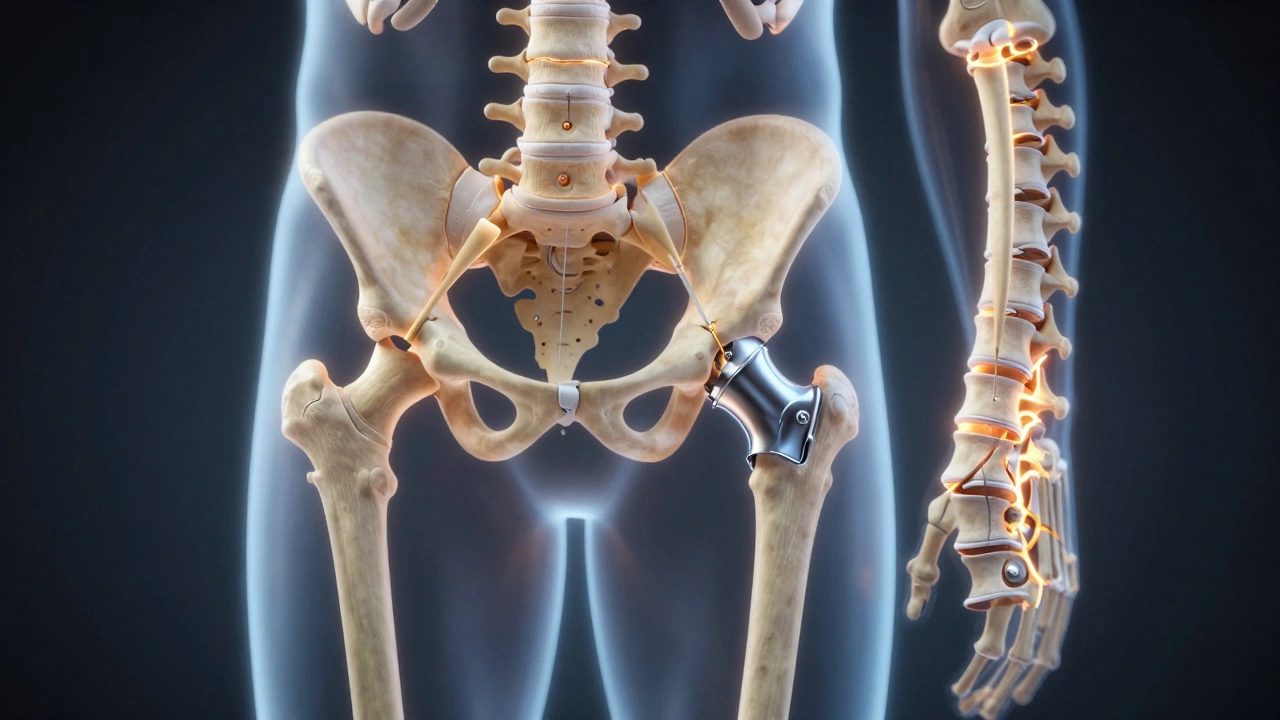
- Joint replacement: Also called arthroplasty. This is when a damaged joint (like the hip or knee) is removed and replaced with an artificial one. Over 1 million knee replacements and 400,000 hip replacements are done in the U.S. each year.
- Osteotomy: This involves cutting and reshaping a bone to correct alignment. It’s often used for younger patients with early arthritis in one side of the knee. By shifting weight away from the damaged area, the surgery can delay or even avoid a full joint replacement.
- Bone grafting: When a bone won’t heal on its own-like after a severe fracture or infection-a surgeon might transplant bone tissue from another part of the body (or a donor) to stimulate healing. This is common in spinal fusion and complex limb reconstruction.
- Spinal fusion: Two or more vertebrae are joined together using bone grafts and metal hardware. It’s done for severe back pain, scoliosis, or after trauma. The goal is to stop movement between the bones, which reduces pain.
- Arthroscopy: A minimally invasive procedure where a tiny camera is inserted through a small cut to see inside a joint. Surgeons can repair torn cartilage, remove loose fragments, or treat early arthritis without opening the joint fully.
Each of these has a specific medical name, but they all fall under the umbrella of orthopedic surgery. You might hear a surgeon say, “We’ll do a tibial osteotomy,” or “We’re going in for a total hip arthroplasty.” These aren’t fancy words-they’re precise terms that tell other doctors exactly what’s being done.
Why the Name Matters
Using the right term isn’t just about sounding smart. It affects your care. If you search for “bone surgery” online, you’ll get vague results. But if you search for “orthopedic surgery for knee arthritis,” you’ll find studies, surgeon profiles, and recovery guides that actually help.
Insurance companies use these exact terms too. Your claim might get denied if the paperwork says “bone surgery” instead of “total knee arthroplasty.” Hospitals and billing departments rely on standardized medical codes-like CPT and ICD-10 codes-that match the official procedure names.
Even when talking to your surgeon, using the correct terminology helps you understand your options. If you say, “I heard about bone grafting for my spine,” your doctor knows you’ve done some research. That opens up a better conversation.
Who Performs These Surgeries?
Only doctors with specialized training in orthopedics can legally perform these procedures. After medical school, they complete a five-year orthopedic surgery residency. Many go on to do an extra year or two of fellowship training in areas like hand surgery, sports medicine, or pediatric orthopedics.
They don’t just cut bones-they study how bones heal, how joints wear out, and how muscles work with skeletons. Some focus on trauma-fixing bones after car accidents. Others specialize in degenerative conditions like osteoarthritis. A surgeon who does hip replacements every day isn’t the same as one who fixes broken wrists in kids.
What Happens Before and After Surgery?
Orthopedic surgery isn’t just about the scalpel. The process starts long before the operation. You’ll likely get X-rays, MRIs, or CT scans to see exactly where the problem is. Blood tests and heart checks are common, especially for older patients.
After surgery, recovery varies. A simple wrist fracture might need six weeks in a cast. A hip replacement usually requires three to six months of physical therapy. Some patients go home the same day. Others stay in the hospital for several days.
Pain management is a big part of recovery. Most hospitals now use multi-modal approaches-combining ice, nerve blocks, non-opioid painkillers, and physical therapy-to reduce reliance on strong opioids. Studies show this leads to faster recovery and fewer complications.
Common Myths About Orthopedic Surgery
There’s a lot of misinformation out there. Here are a few myths and the facts:
- Myth: “You’ll never be the same after joint replacement.”
Fact: Most patients report better mobility and less pain than before surgery. Many return to walking, swimming, and even hiking. - Myth: “Bone grafting means taking bone from my hip.”
Fact: While that’s one option, surgeons now use synthetic bone substitutes or donor bone from tissue banks. These work just as well in many cases. - Myth: “If I have surgery, I’ll need another one in 10 years.”
Fact: Modern joint implants last 20-30 years for most people. Many patients never need a second surgery. - Myth: “Orthopedic surgery is only for older people.”
Fact: Athletes in their 20s get ACL repairs. Teenagers get scoliosis corrections. Kids get growth plate repairs. Age doesn’t limit this field.

When Is Surgery the Right Choice?
Not every bone problem needs surgery. Doctors usually try physical therapy, braces, medication, or injections first. Surgery becomes an option when:
- Pain doesn’t improve after 3-6 months of non-surgical treatment
- Mobility is severely limited-like not being able to walk without help
- There’s nerve damage or risk of permanent injury
- A fracture won’t heal on its own
For example, if you have a torn ACL and you’re active, surgery might be the best way to get back to sports. But if you’re mostly sedentary, physical therapy might be enough. There’s no one-size-fits-all answer.
What to Ask Your Surgeon
Before agreeing to any procedure, ask these questions:
- What’s the exact name of the surgery?
- How many times have you done this specific procedure?
- What are the risks compared to not having surgery?
- What’s the recovery timeline? When can I walk, drive, or return to work?
- Will I need physical therapy? How often?
- Are there alternatives I haven’t tried yet?
Good surgeons welcome these questions. They know you’re making a big decision.
Final Thoughts
So, what is bone surgery called? It’s orthopedic surgery-and it’s one of the most effective, well-studied areas of modern medicine. Whether you’re fixing a broken bone, replacing a joint, or correcting a spine, the goal is the same: restore function and reduce pain.
The key is knowing the right terms. That way, you can research accurately, talk clearly with your doctors, and make confident decisions. You don’t need to be a medical expert. You just need to know what to ask-and what to look for.
Is bone surgery the same as orthopedic surgery?
Yes, bone surgery is commonly referred to as orthopedic surgery. Orthopedic surgery is the formal medical term for procedures that treat bones, joints, ligaments, tendons, and muscles. While people may say “bone surgery” in casual conversation, medical professionals, insurance companies, and hospitals use “orthopedic surgery” as the official term.
What’s the most common type of orthopedic surgery?
The most common orthopedic surgeries are knee and hip replacements. In the U.S. alone, over 1 million knee replacements and 400,000 hip replacements are performed each year. These procedures are typically done for osteoarthritis when pain and stiffness severely limit daily activities. Fracture repairs and spinal fusions are also very common, especially in trauma centers and older populations.
Do all orthopedic surgeons do the same procedures?
No. Orthopedic surgeons often specialize. Some focus on trauma and emergency fracture repairs. Others specialize in sports medicine, pediatric orthopedics, hand surgery, spine surgery, or joint replacement. A surgeon who does hundreds of knee replacements each year won’t typically fix broken wrists in children-that’s a different specialty. Training after residency (called a fellowship) allows them to focus on one area.
How long does recovery take after orthopedic surgery?
Recovery time varies widely. A simple wrist fracture might heal in 6 weeks with a cast. A total knee replacement usually takes 3 to 6 months to fully recover, with physical therapy playing a big role. Spinal fusion can take 6 to 12 months for bones to fuse completely. Most patients can walk with help within days, but full strength and mobility take longer. Your surgeon will give you a timeline based on the procedure and your health.
Can bone surgery be avoided?
Yes, in many cases. Non-surgical options like physical therapy, weight management, braces, anti-inflammatory medications, and injections (like cortisone or hyaluronic acid) can help manage pain and delay surgery. Surgery is usually recommended only when these methods fail to improve function or relieve severe pain. For example, many people with early knee arthritis can avoid replacement for years with exercise and lifestyle changes.