Ayurveda Dosha Quiz: Discover Your Body Type
How Well Does This Describe You?
Answer 10 simple questions to discover your dominant Ayurvedic dosha. Each question has three options.
Vata
Key traits: Light, mobile, cold
Pitta
Key traits: Hot, sharp, oily
Kapha
Key traits: Heavy, slow, moist
Ayurveda isn’t just about herbs or massage. It’s a 5,000-year-old system of health that sees your body as a living ecosystem. If you’ve ever felt tired no matter how much you sleep, or got sick every time the weather changed, Ayurveda might explain why. It doesn’t treat symptoms-it looks at the root. And that root? It’s built on four simple but powerful basics.
Prakriti: Your Unique Body Type
Every person is born with a unique combination of energies. In Ayurveda, this is called prakriti. Think of it like your biological fingerprint. It’s fixed from birth and determines how your body digests food, handles stress, and responds to seasons. You can’t change it. But you can learn to live with it.
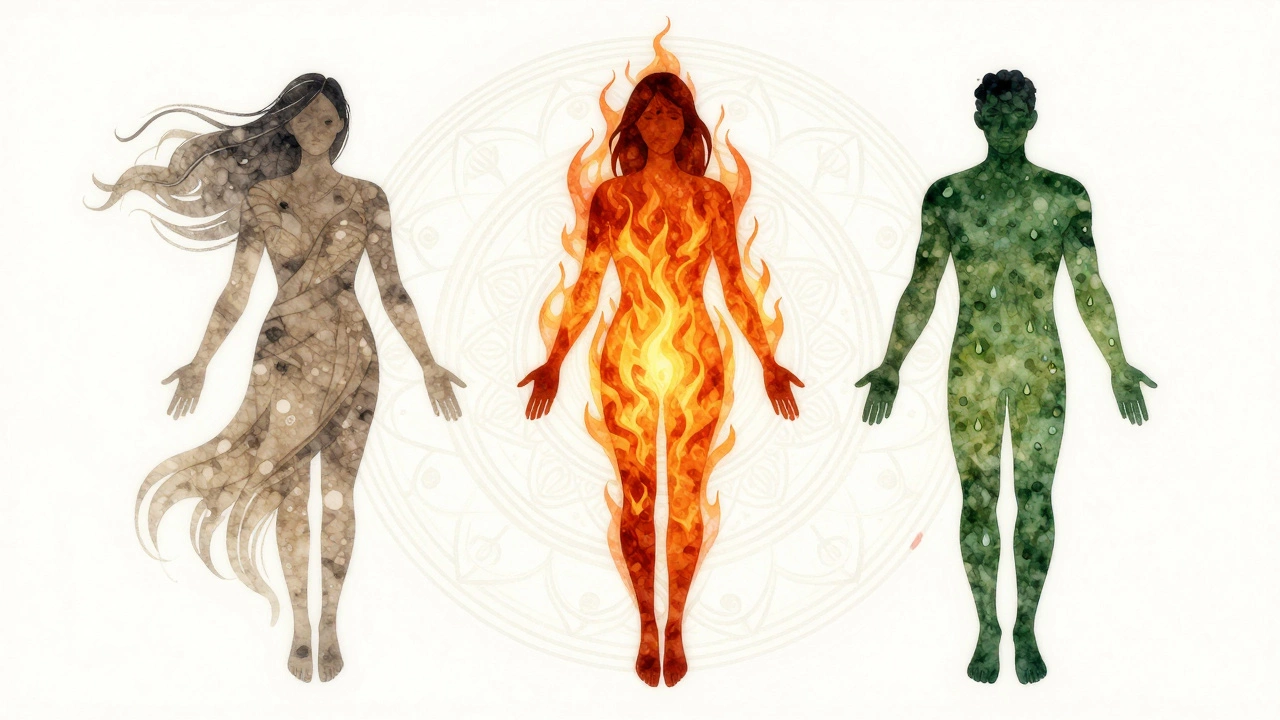
There are three main prakriti types, called doshas: Vata, Pitta, and Kapha. Most people are a mix, but one usually dominates. Vata types tend to be thin, energetic, and prone to anxiety. Pitta types have strong digestion, sharp minds, and get irritated easily. Kapha types are steady, calm, and carry weight more easily. Knowing your prakriti tells you what foods to avoid, what time to wake up, and even what kind of exercise suits you best.
Most people in India and beyond don’t know their prakriti. They follow diets that work for others-and end up feeling worse. A Vata person eating cold salads and skipping meals? That’s a recipe for bloating and insomnia. A Pitta person drinking too much coffee and working late? That’s burnout waiting to happen.
Doshas: The Three Biological Energies
The doshas aren’t just categories-they’re active forces inside you. Vata controls movement: breathing, blinking, circulation, nerve impulses. Pitta runs metabolism: digestion, body temperature, hormone activity. Kapha builds structure: muscles, bones, fluids, immunity.
When they’re balanced, you feel clear-headed, sleep well, and bounce back from illness fast. When they’re out of balance, things go wrong. Vata imbalance? Dry skin, constipation, racing thoughts. Pitta imbalance? Acid reflux, anger, skin rashes. Kapha imbalance? Weight gain, sluggishness, congestion.
What throws them off? Poor diet, irregular sleep, stress, or even the season. In winter, Vata rises naturally. In summer, Pitta spikes. Ayurveda doesn’t fight this-it adjusts. You eat warm, cooked food in winter. You avoid spicy food in summer. It’s not magic. It’s timing.
Many people think Ayurveda is only for Indians. But in Bangalore, where I live, even tech workers use it. They wake up before sunrise, drink warm water with lemon, and avoid screens after 8 PM-not because it’s trendy, but because it keeps their doshas steady.
Dhatu: The Seven Tissues That Keep You Alive
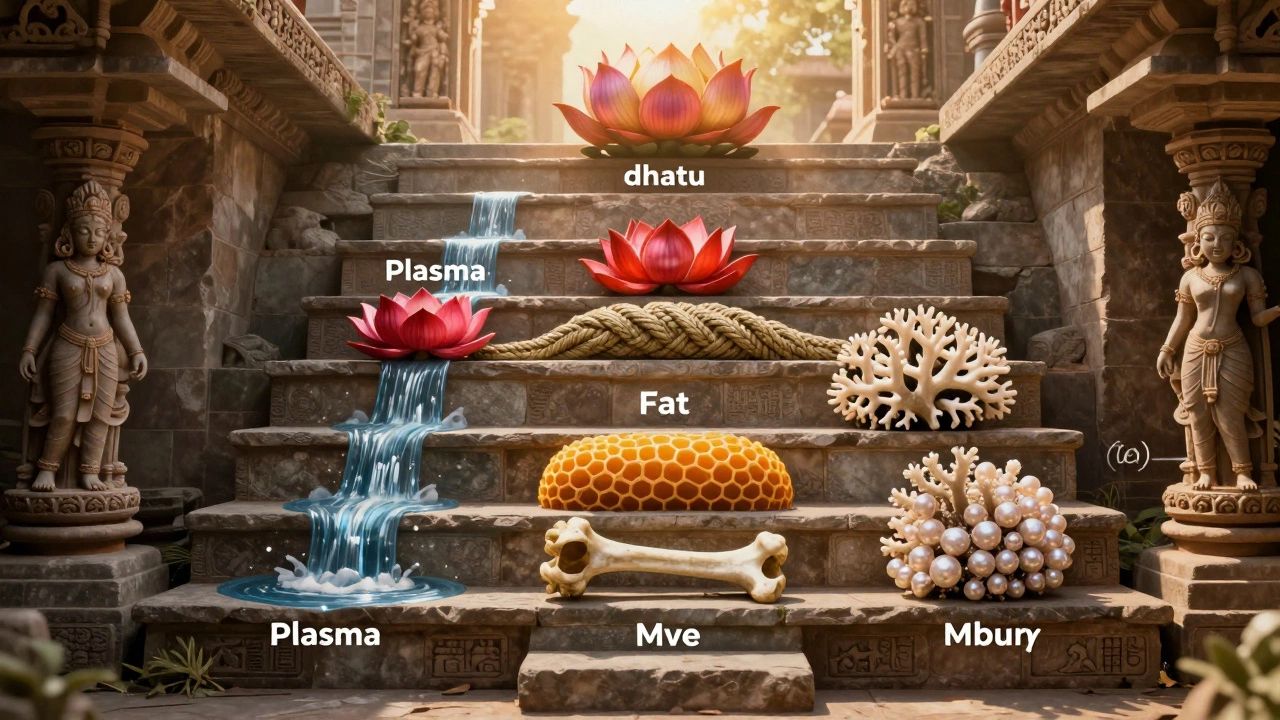
Ayurveda doesn’t talk about cells or organs the way modern medicine does. Instead, it looks at seven layers of tissue, called dhatu. Each one builds on the last, like stacking bricks. Rasa (plasma) feeds rakta (blood), which feeds mamsa (muscle), which feeds meda (fat), which feeds asthi (bone), which feeds majja (marrow), which finally becomes shukra (reproductive tissue).
This isn’t just theory. It explains why fixing digestion matters more than popping vitamins. If your rasa (nutrient fluid) is weak because your gut can’t absorb food, nothing else gets built right. You can take iron for low blood, but if your digestion is broken, your body won’t use it. That’s why Ayurveda starts with agni-the digestive fire.
Weak dhatu shows up in obvious ways. Thin bones? Weak asthi. Constant fatigue? Low rasa or meda. Low libido? Shukra is depleted. Most people chase quick fixes-supplements, workouts, creams. Ayurveda says: fix the foundation. Feed the first tissue, and the rest will follow.
Agni: Your Digestive Fire
If one thing matters more than anything else in Ayurveda, it’s agni. This isn’t just stomach acid. It’s the fire that turns food into energy, thoughts into understanding, and emotions into wisdom. Weak agni means toxins (ama) build up. That’s when you feel heavy, foggy, or sick without reason.
Agnee is strongest at noon. That’s why Ayurveda says lunch should be your biggest meal. Breakfast? Light. Dinner? Lightest. Eat late? Agni slows. Food sits. Ama forms. Over time, that leads to joint pain, allergies, or even chronic illness.
Simple habits strengthen agni: eat when hungry, don’t drink ice water with meals, chew slowly, and never eat while stressed. I’ve seen people in Bangalore who stopped eating dinner after 7 PM-and dropped 10 kilos without dieting. Not because they ate less. Because they ate right.
Modern science now calls this circadian rhythm. Ayurveda called it agni 3,000 years ago. The body doesn’t lie. When you eat like your ancestors did, your body works like it was meant to.
Why This Matters Today
Ayurveda’s four basics-prakriti, doshas, dhatu, and agni-are not ancient myths. They’re practical tools for modern life. You don’t need to wear linen or chant mantras to use them. You just need to know your body.
Think of it like this: if your phone runs slow, you don’t buy a new one. You clear the cache, close apps, update the OS. Your body is the same. The four basics are your operating system. When they’re balanced, you don’t need pills to sleep, to lose weight, or to stop feeling tired.
Start simple. Find your dosha. Eat your biggest meal at noon. Skip late-night snacks. Drink warm water in the morning. That’s it. You don’t need a guru or a $500 detox. You just need to pay attention.