Reverse Stiffness: What It Is, Why It Happens, and What You Can Do
When you get up in the morning and your joints feel locked, or your back refuses to bend after sitting too long, you’re not just "feeling old." You’re experiencing what some call reverse stiffness, a pattern where movement is hardest after rest and improves with activity. Also known as gelling phenomenon, it’s not a disease—but a signal your body’s giving you about how your joints, muscles, or nerves are responding to inactivity. This isn’t the same as morning stiffness from rheumatoid arthritis, where movement doesn’t help. Reverse stiffness gets better the more you move. That’s the clue.
This pattern shows up in people with osteoarthritis, the wear-and-tear joint disease that affects knees, hips, and spine, especially after sitting for hours. It also shows up in nerve compression, like carpal tunnel or sciatica, where pressure on a nerve makes movement feel stiff until the nerve "wakes up." Even people recovering from surgery or long bed rest can feel this—your tissues forget how to glide smoothly after too much stillness.
What’s happening? Your synovial fluid, which lubricates joints, thickens when you’re still. Muscles tighten because they’re not getting the signals to relax. Nerves get irritated when they’re compressed and then suddenly asked to fire. Movement fixes all three. Walking for five minutes, stretching your arms, rolling your shoulders—these aren’t just warm-ups. They’re resets.
Most people try heat packs or painkillers first. But those don’t fix the root issue. The real fix is consistent, gentle motion. Not intense workouts. Just daily movement: standing up every 30 minutes, doing ankle circles while sitting, walking around the house after meals. In India, where many sit on the floor or squat often, this pattern shows up differently—stiffness after kneeling or sitting cross-legged. That’s reverse stiffness too.
You’ll find posts here that talk about joint pain after rest, mobility challenges after surgery, and how simple habits can undo stiffness without drugs. Some of these stories come from people managing arthritis, others from those recovering from knee replacements or dealing with nerve issues. You’ll see what works in real life—not just what’s written in textbooks.
If you’ve ever thought, "I’m fine once I start moving," you’re not alone. And you’re not just being lazy. Your body is trying to tell you something. The posts below give you the practical steps—what to do, what to avoid, and what no one tells you about getting your movement back.
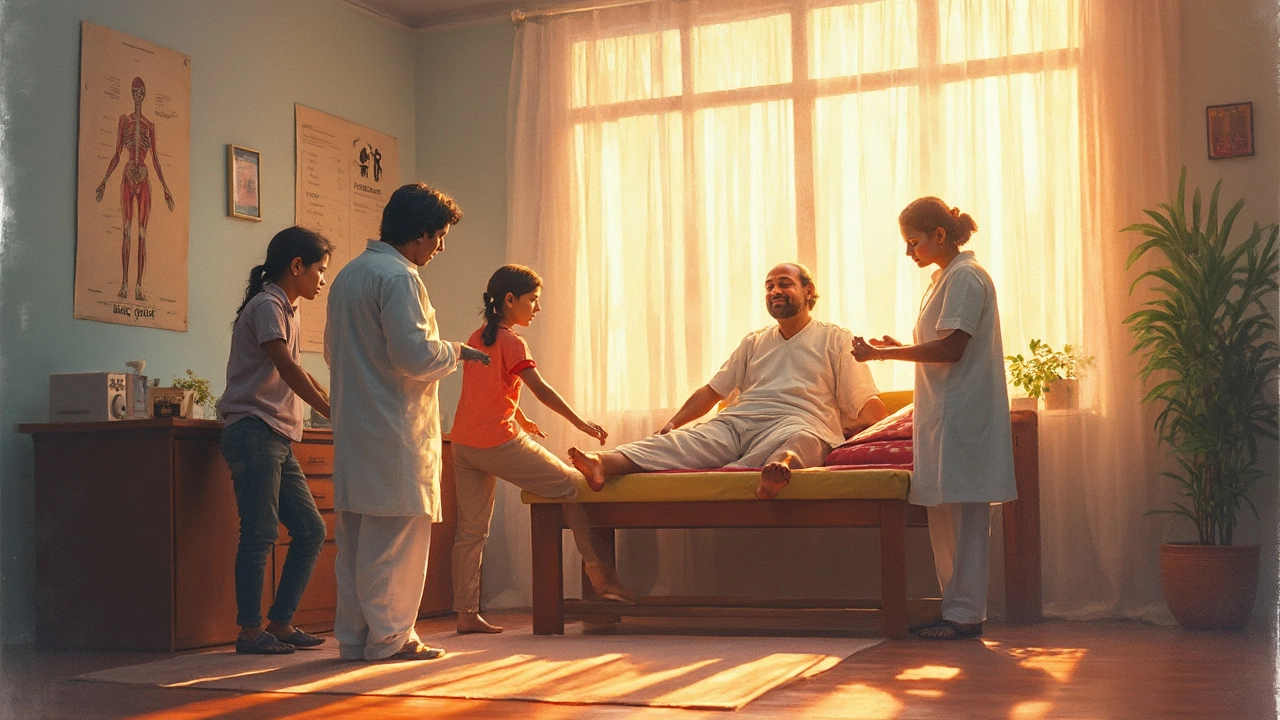
Can You Reverse Knee Stiffness with Effective Strategies?
Knee stiffness, especially following knee replacement surgery, can be a frustrating hurdle for many patients. While it might seem like a permanent consequence, various methods can help alleviate this rigidity. From physiotherapy techniques to lifestyle adjustments, understanding and implementing these strategies can lead to improved mobility. It's about finding the right mix of approaches to personalize your recovery journey.

Recent Posts
What Is Bone Surgery Called? Common Terms and Procedures Explained
December 1, 2025
How do I know I should go to therapy? Signs and guidance
March 27, 2026
Post-Open-Heart Surgery Anger: Causes and Coping Strategies
October 13, 2025