Open Heart Surgery Recovery Calculator
Recovery Calculator
Get personalized guidance on your recovery timeline after open heart surgery
How This Works
Your recovery timeline depends on the surgical approach and your age. We use evidence-based medical guidelines to estimate your milestones. Remember: individual recovery varies, but this gives you a realistic expectation.
Your Personalized Recovery Timeline
What You Can Do After 4 Weeks
Light walking, gentle household tasks, short drives
What You Should Avoid After 6 Weeks
No heavy lifting, no pushing/pulling, no contact sports
Important Recovery Warnings
- Avoid lifting anything heavier than 10 pounds
- Never strain during coughing or sneezing
- Report sudden chest pain or fever immediately
When someone hears they need open heart surgery, one of the first fears that pops up is: do they have to break your ribs? It sounds brutal. Like something out of an old horror movie. The truth? They don’t break your ribs. But they do cut through your breastbone - and that’s enough to make anyone nervous.
What Actually Happens During Open Heart Surgery?
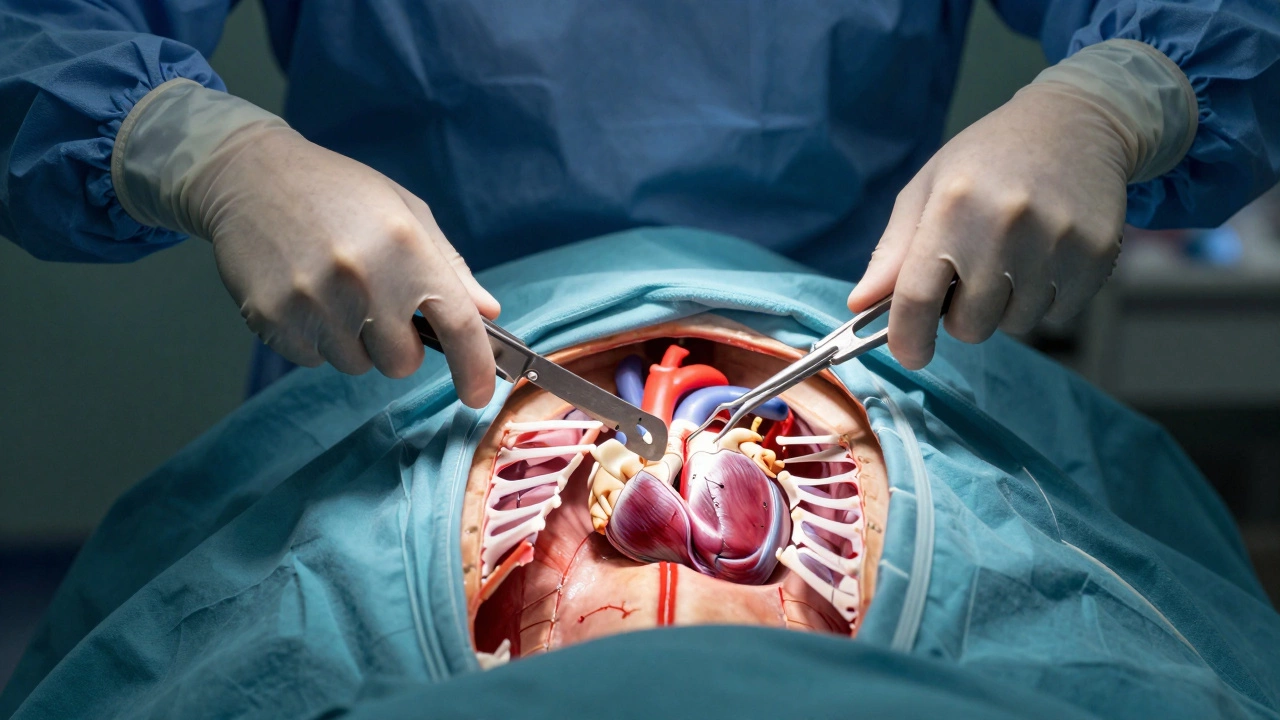
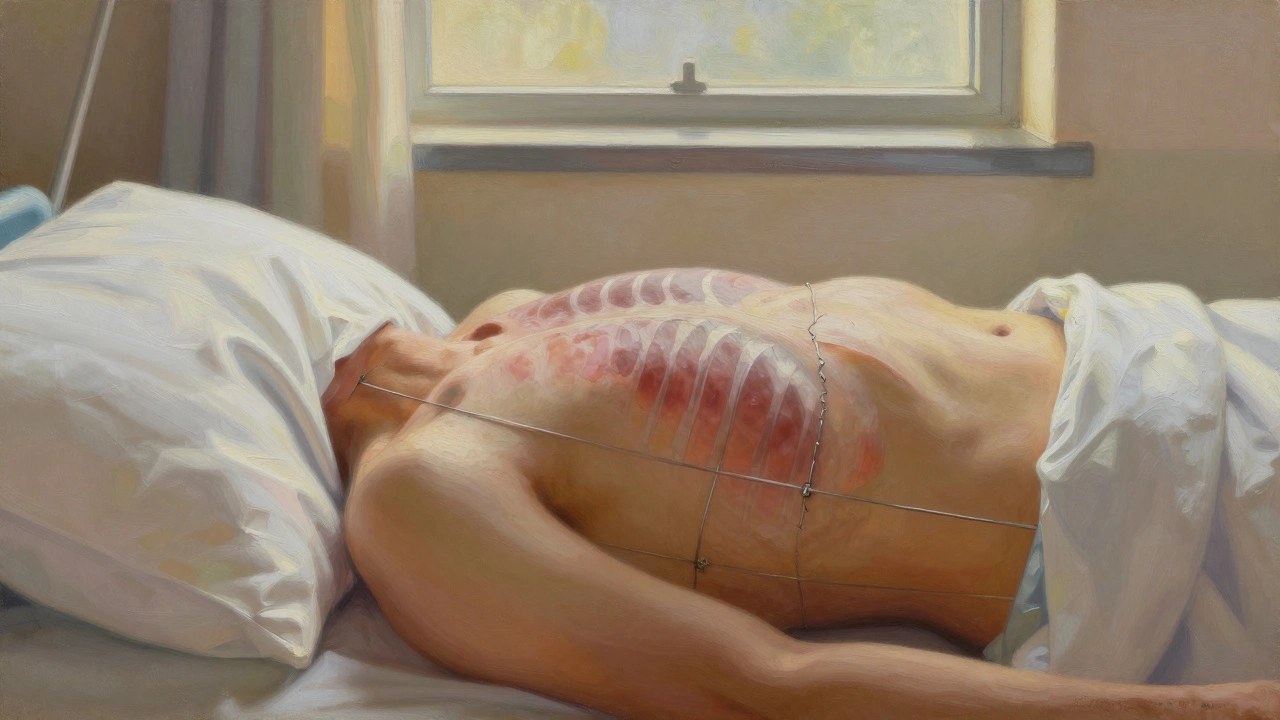
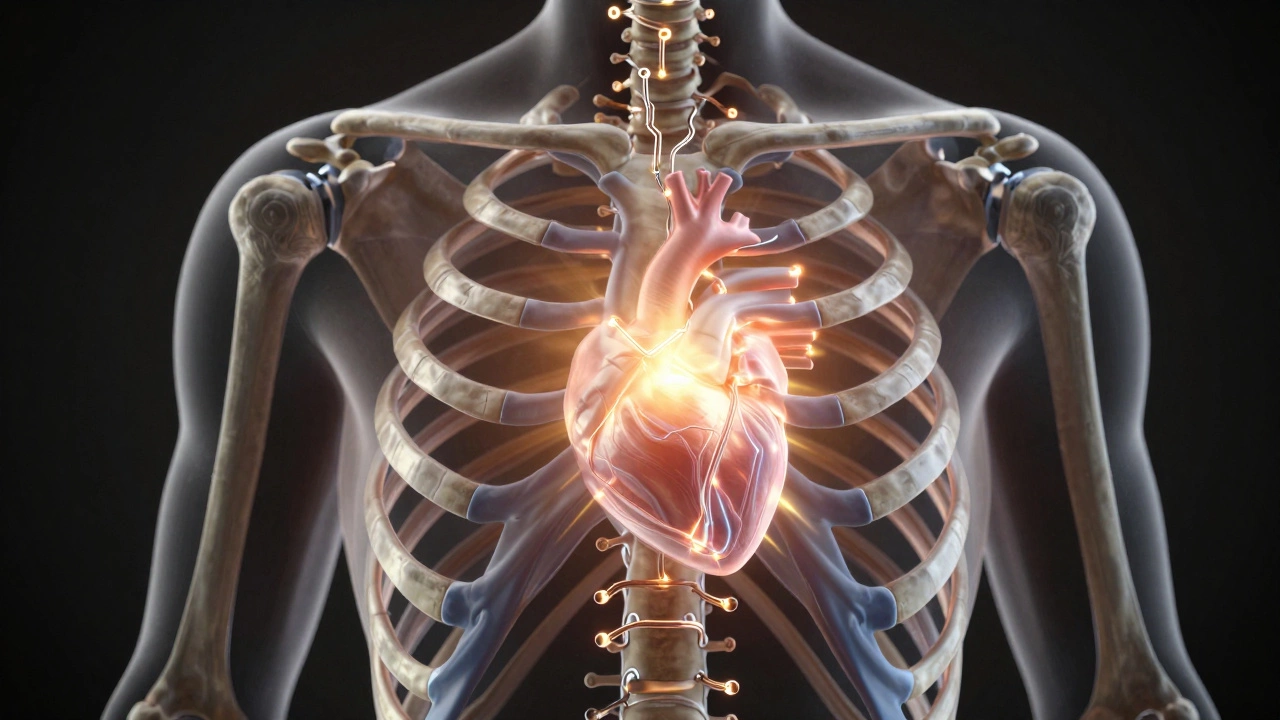
Open heart surgery isn’t about smashing ribs. It’s about access. To reach your heart, surgeons need a clear, wide-open path. That’s why they make a vertical cut down the middle of your chest, right over your sternum - the long flat bone that connects your ribs. Then, using a special saw, they cut through the sternum itself. This is called a median sternotomy. It’s the most common approach for bypasses, valve replacements, and repairs.You might hear people say the sternum is "broken" - and technically, yes, it’s divided. But it’s not the same as a broken rib from a fall. The sternum is designed to be cut and rejoined. It’s like opening a hinge, not shattering something fragile. After surgery, the sternum is closed with stainless steel wires that hold it together while it heals. Those wires stay in forever. You won’t feel them. You won’t need them removed.
Why Not Just Go Between the Ribs?
You might wonder: why not slip in between the ribs like they do in some lung surgeries? Simple: the heart sits deep, protected by the sternum and rib cage. Going between ribs gives you a narrow view. For open heart surgery - where you’re working on a beating heart, sewing grafts, or replacing valves - you need room to move, see clearly, and work safely.There are newer techniques like minimally invasive surgery, where doctors make smaller cuts between the ribs. But those are usually for single valve procedures, not full bypasses. Even then, they’re not for everyone. If you have complex disease, multiple blockages, or previous surgeries, the traditional sternotomy is still the gold standard. It’s proven. It’s reliable. And it gives the surgeon the best chance to get it right the first time.
What Does It Feel Like After?
The pain after sternotomy isn’t from broken ribs. It’s from the cut bone, the stretched muscles, and the fact that every breath, cough, or movement pulls on the healing sternum. Most people say it feels like a deep, constant ache - not sharp, but heavy. It’s worse when you laugh, sneeze, or try to sit up too fast.Doctors give you pain meds. You’ll also get a breathing device called an incentive spirometer to help you take deep breaths without flinching. Physical therapists will teach you how to move safely. You’ll learn to hug a pillow to your chest when you cough - it’s not silly, it’s science. That pressure stabilizes the sternum and cuts pain by half.
Recovery takes time. Most people are up and walking within 2-3 days. But the sternum takes about 6-8 weeks to fully heal. You can’t lift anything heavier than 10 pounds. No pushing lawnmowers, no carrying groceries, no hugging kids too tight. That’s not just caution - it’s physics. The wires holding your sternum together can bend or snap if you put too much force on it too soon.
What About the Ribs?
Your ribs aren’t cut. They’re moved aside. During the procedure, the surgeon spreads your ribs apart using a retractor - a metal tool that gently holds them open. It’s uncomfortable, but not destructive. Some people feel numbness or tingling along the sides of their chest afterward. That’s from nerves being stretched during the spread. It usually fades over months, sometimes up to a year. Rarely, it’s permanent.There’s no rib fracture involved unless there’s a complication - like a very forceful cough during recovery, or a fall. That’s why doctors stress avoiding straining. A cracked rib after open heart surgery can delay healing by weeks and increase infection risk.
Alternatives: Are There Less Invasive Options?
Yes - but they’re not magic. Minimally invasive techniques exist:- Robotic-assisted surgery: Tiny incisions, robotic arms. Used for some valve repairs.
- Small incision sternotomy: Half the sternum is cut. Good for single valve cases.
- Thoracotomy: Cut between ribs. Used for lung or some heart procedures, but rarely for bypasses.
These methods mean smaller scars and less pain. But they’re not faster. You still need weeks to recover. And they’re not for everyone. If you’ve had prior chest surgery, severe calcification, or complex coronary disease, the traditional sternotomy is still the safest path.
Studies show no big difference in long-term survival between minimally invasive and open approaches. The goal isn’t the smallest cut - it’s the most durable fix. For most patients, that means the sternotomy.
Myths and Misconceptions
There’s a lot of fear around this surgery - and a lot of misinformation. Let’s clear a few myths:- Myth: They crack your ribs open like a lobster. Truth: Ribs aren’t broken. They’re gently spread.
- Myth: You’ll never lift your arms again. Truth: You’ll regain full motion. It just takes patience and rehab.
- Myth: The wires will set off metal detectors. Truth: Sometimes they do. Carry a doctor’s note. Most airports have no issue.
- Myth: You’ll feel the wires forever. Truth: Most people forget they’re there. A tiny number feel occasional pressure, but it’s rare.
What to Expect in the First 3 Months
- Week 1-2: Hospital stay. Pain controlled. Walking with help. Breathing exercises daily.By 3 months, most people are back to their usual routines. Some return to work. Some start gardening. Others take up walking again. The sternum is solid by then. The wires? They’re just quiet metal now - holding you together, silently.
Final Thought: It’s Not About Breaking Bones - It’s About Saving Life
Open heart surgery isn’t gentle. But it’s not barbaric. It’s precise. It’s deliberate. And it’s one of the most successful procedures in modern medicine. Over 500,000 open heart surgeries are done in the U.S. every year. Most people go on to live full, active lives - 10, 20, even 30 years later.The sternotomy isn’t perfect. But it’s the best tool we have for the most complex heart problems. And yes - you’ll heal. Your ribs will stay intact. Your sternum will knit back together. And you’ll forget, one day, that you ever worried about it.
Do they break your ribs during open heart surgery?
No, they do not break your ribs. Instead, surgeons make a vertical cut through the sternum (breastbone) and spread your ribs apart using a retractor. The ribs themselves remain intact. The sternum is divided, not broken like a fracture - it’s carefully cut and then wired back together after surgery.
How long does it take for the sternum to heal after open heart surgery?
The sternum typically takes 6 to 8 weeks to heal enough for normal activity, but full strength can take up to 3 months. During this time, you must avoid lifting heavy objects, pushing, pulling, or any motion that puts stress on the chest. The steel wires used to close the sternum remain in place permanently and help stabilize the bone as it heals.
Can you feel the wires in your chest after surgery?
Most people never feel the wires. They’re thin stainless steel and sit deep under the skin. A small number of patients report occasional pressure or a dull ache in the chest, especially when lying on their back or during weather changes. This is rare and usually fades over time. The wires are not removed unless there’s an infection - which happens in less than 1% of cases.
Is minimally invasive heart surgery better than traditional open surgery?
Minimally invasive techniques have smaller scars and less pain in the short term, but they’re not always better. They’re limited to specific procedures like single valve repairs. For complex cases - such as multiple bypasses, severe calcification, or redo surgeries - traditional open surgery with sternotomy offers better access, more control, and proven long-term results. Survival rates and complication rates are similar between both methods, so the choice depends on your specific condition, not just the size of the incision.
Why can’t surgeons just go between the ribs for open heart surgery?
Going between the ribs gives limited access to the heart. Open heart surgery requires a wide, clear view to safely repair valves, graft arteries, or fix complex defects. The sternotomy provides the necessary space for surgeons to work precisely. While some minimally invasive approaches use small incisions between ribs, they’re not suitable for most major procedures. The traditional approach remains the standard because it’s reliable and safe for the broadest range of patients.
If you’re facing open heart surgery, know this: the process is designed to protect you, not hurt you. The sternum is cut to save your heart - not to break your body. Healing takes time, but it’s worth it. Thousands do it every year. And they walk out stronger than they were before.