Knee Replacement Tips: Recovery, Care, and What to Expect
When you get a knee replacement, a surgical procedure where damaged knee joint parts are replaced with artificial components to restore movement and reduce pain. Also known as total knee arthroplasty, it’s one of the most common orthopedic surgeries in India, especially for people over 50 with severe arthritis. But the surgery is just the start—what happens next matters just as much. Many people focus on the operation itself, but the real challenge is the recovery: the first few days, the weeks of rehab, and learning how to move again without fear.
One of the biggest questions patients ask is: What’s the hardest day after knee replacement? For most, it’s day two or three. That’s when the numbing meds wear off, swelling peaks, and the real work of physical therapy begins. You’re not just healing—you’re relearning how to bend your knee, stand up, and walk. Pain is normal, but it shouldn’t stop you from moving. Your physical therapist will guide you through simple exercises that prevent stiffness and blood clots. Skipping them? That’s how you end up with a stiff knee for months.
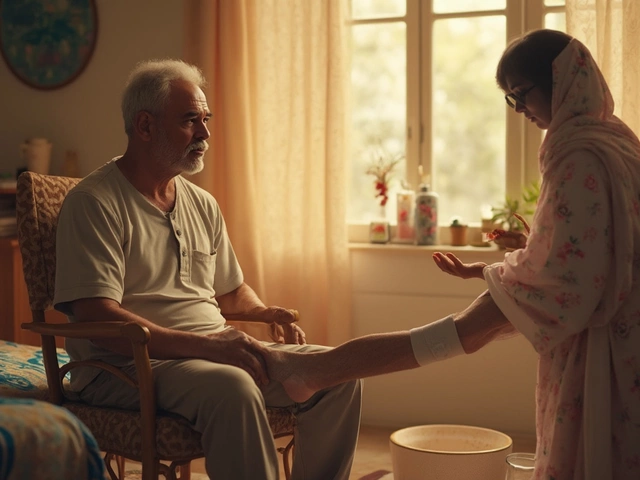
Another key part of recovery is post-op hygiene, how you care for your wound and keep it clean to avoid infection. Showering after knee replacement sounds simple, but it’s tricky. You can’t let water soak the dressing too early, and you need to avoid slipping. Most doctors say you can shower safely after 48 hours if the incision is sealed and covered with a waterproof dressing. Use a shower chair, keep the leg dry as long as possible, and never scrub the area. If you see redness, pus, or a sudden spike in pain, call your doctor—those are red flags.
Then there’s knee replacement pain, the discomfort that lingers as nerves heal and muscles rebuild. It’s not the same as pre-surgery pain. This pain comes from movement, not damage. It’s the kind that makes you want to quit rehab—but it’s also the kind that fades fastest if you stick with it. Ice helps. Elevating your leg helps. So does staying active, even if it’s just walking to the bathroom five times a day.
Recovery isn’t about speed. It’s about consistency. People who walk every day, even for five minutes, do better than those who rest too long. You don’t need to run. You don’t need to lift heavy weights. Just keep moving. Your new knee wasn’t designed to sit still. It was built to bend, to support, to carry you through daily life.
What you’ll find in the posts below are real, no-fluff guides from people who’ve been through it: when to shower, which day hurts the most, how to sleep comfortably, what to eat for faster healing, and what mistakes to avoid. No marketing. No hype. Just what actually works for recovery in the Indian context—where homes aren’t always equipped with hospital beds, and family support plays a huge role. This isn’t just advice. It’s a roadmap.

How Long Does My Leg Need to Stay Straight After Knee Replacement Surgery?
Ever tried sleeping with your leg stuck out straight all night? After knee replacement surgery, that's just the start. This article unpacks why it matters, how long you need to keep your leg straight, and how to make those nights (and days) much more comfortable. Get practical tips, what doctors actually recommend, and the real side of recovery. Let’s unravel the facts and make your recovery a bit smoother.

Recent Posts

Hardest-to-Control Diabetes Type: A Comprehensive Guide
October 17, 2025

Most Healing Herb: What Packs the Biggest Punch?
May 20, 2025