IVF Shot Pain Estimator
Estimate your expected IVF shot pain level based on your specific medication, injection site, and other factors. This tool is designed to help you prepare and reduce anxiety about the process.
Your Estimated Pain Level
Personalized Tips
When you first hear you’ll need daily IVF shots, your mind races: How painful are IVF shots? Is it like a bee sting? Will it ruin my day? Can I even do this? The truth is, most people find IVF injections far less painful than they expect-but that doesn’t mean it’s easy. It’s not just about the needle. It’s about the fear, the routine, the exhaustion, and the emotional weight behind every shot.
What do IVF shots actually feel like?
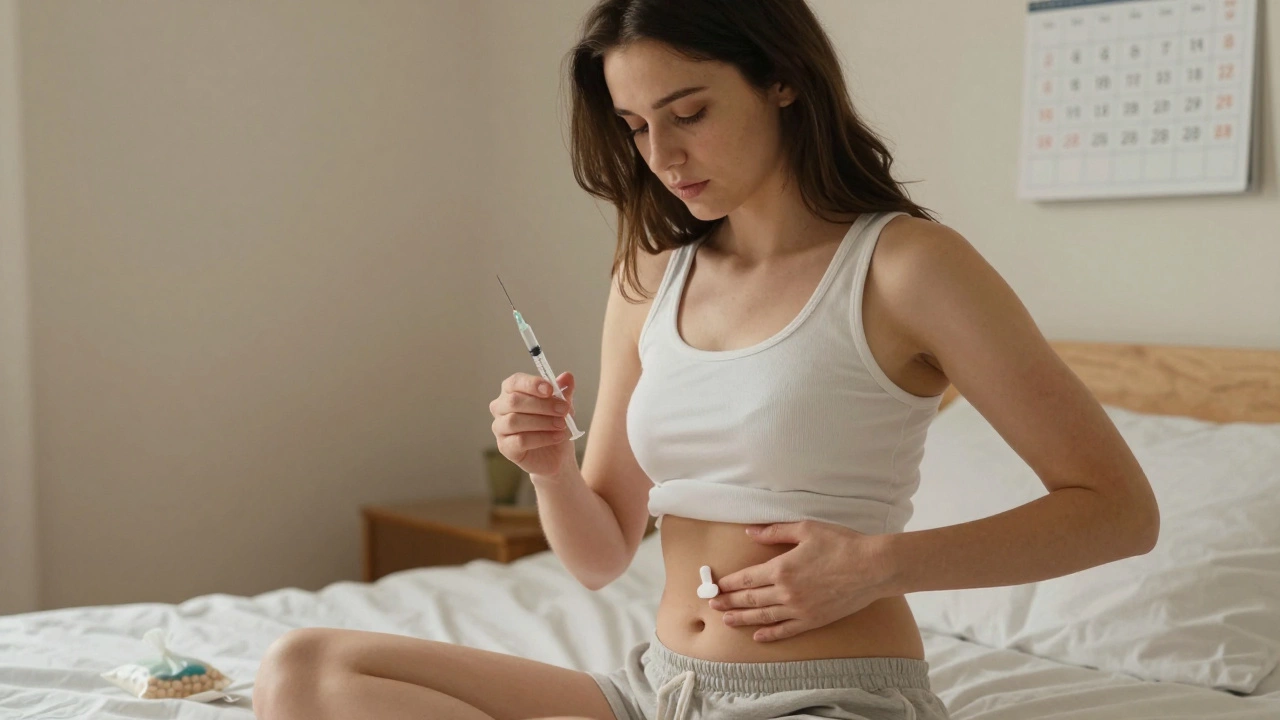
Most IVF injections are subcutaneous, meaning they go just under the skin, not deep into muscle. Think of it like giving yourself a insulin shot if you have diabetes, or a flu shot-but smaller and usually less deep. The needle is thin, often 27 to 30 gauge. That’s thinner than a human hair. Many patients describe it as a quick pinch, similar to a mosquito bite. Some feel nothing at all.
The pain isn’t from the needle itself. It’s from the anticipation. The first time you pick up that syringe, your heart pounds. You stare at the vial, the alcohol swab, the plunger. You wonder if you’ll mess it up. You’re scared of the unknown. That’s the real pain-the anxiety before the needle even touches your skin.
Once you get past that first shot, it gets easier. Most people report the discomfort fades after a few days. By cycle week two or three, it’s just part of the morning routine-like brushing your teeth. You don’t even think about it anymore.
Where do you inject IVF medications?
You’ll typically inject in one of three places: the lower abdomen (just below the belly button), the front of the thighs, or the upper outer arms. The abdomen is the most common because it’s easy to reach, has plenty of fatty tissue, and the skin is less sensitive than other areas.
Some clinics recommend rotating sites to avoid soreness. That means one day you inject on the left side of your belly, the next day on the right, then maybe your thigh. It’s like giving your skin a break. You’ll notice little bumps or bruising sometimes-that’s normal. It’s not dangerous, just annoying.
One woman in Bangalore told me she started injecting in her belly, but by day 12, the skin was too tender. She switched to her thighs and said it felt like a relief. "It’s not the pain," she said. "It’s the repetition. My skin started to feel like a battlefield."
Are some IVF drugs more painful than others?
Yes. Not all IVF medications are the same. Some come as clear liquids, others as thick gels. The ones that are thicker-like Gonal-F or Menopur-can cause more burning or pressure when injected. You might feel a slight sting as the fluid moves under your skin. It lasts only a few seconds.
Some medications, like Ovidrel or hCG trigger shots, are given in smaller volumes and are usually less irritating. Others, like Cetrotide or Ganirelix (used to prevent early ovulation), are often injected into the arm and can feel sharper because the skin there is tighter.
Temperature matters too. If the medication is cold from the fridge, it can feel more uncomfortable. Most clinics recommend letting it sit at room temperature for 20-30 minutes before injecting. That small step cuts down on the sting significantly.

How long does the pain last?
The actual needle insertion? Less than five seconds. The burning or pressure? Usually gone in 10-20 seconds. Any lingering soreness? It might last a few hours, sometimes a day. Bruising can appear a day or two later and fade in about a week.
There’s no magic cure for soreness, but a few simple things help: applying a warm compress before the shot relaxes the skin. Massaging the area gently after helps the fluid spread and reduces lumpiness. Some people use numbing creams like EMLA or lidocaine spray-ask your clinic if they’re allowed. Most clinics provide free samples.
One patient I spoke with used a frozen pea bag as a cold pack before her injections. "It numbs the spot just enough," she said. "And I get to eat the peas later. Win-win."
What about the emotional side?
Let’s be honest: the physical pain is the smallest part of the struggle. The real challenge is doing this every single day, for 10 to 14 days straight. You’re injecting yourself while managing work, family, anxiety, hope, and fear. You’re watching your body change in ways you didn’t ask for-bloating, mood swings, fatigue. You’re wondering if this is worth it.
That’s why many people say the hardest part isn’t the needle-it’s the loneliness. You’re doing this alone, even if your partner is beside you. They can’t feel it. They can’t know what it’s like to look at a syringe and feel your stomach drop.
That’s why support groups matter. Online forums, WhatsApp groups for IVF patients in India, even just talking to someone who’s been through it-those connections make the pain bearable. One woman in Pune told me she kept a journal: "Day 5: Shot done. Felt like a warrior today." That small act gave her power.

How do you get better at giving yourself shots?
Practice makes perfect. Most clinics offer a training session with a nurse. They’ll show you how to hold the syringe, pinch the skin, insert at the right angle. Don’t skip it. Even if you think you’re "good with needles," you’ll learn tips you didn’t know existed.
Here’s what works for most people:
- Use a mirror at first-seeing what you’re doing reduces fear.
- Don’t rush. Breathe in, exhale slowly as you push the plunger.
- Keep your hand steady. Rest your elbow on a table if you’re shaky.
- Don’t look at the needle. Focus on your breathing instead.
- Use a distraction: listen to music, watch a show, talk to a friend on the phone.
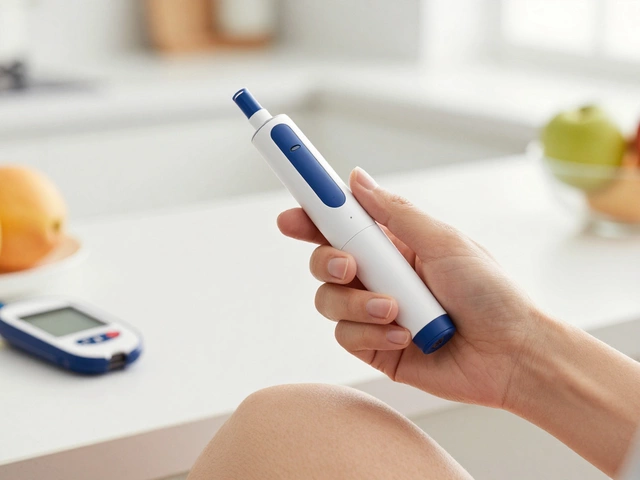
Some people use injection aids-devices that hold the syringe and press it automatically. They’re not widely known, but they exist. Ask your clinic. They might have one you can borrow.
What if you’re terrified of needles?
You’re not alone. Many people with needle phobia go through IVF. It’s not weakness. It’s human. The good news? There are ways to manage it.
Some clinics offer numbing patches you apply 30 minutes before. Others use a vibrating device that distracts your nerves (called a Buzzy). One woman in Hyderabad used a weighted blanket during her shots-she said the pressure calmed her nerves. Another played ASMR sounds to distract herself.
If your fear is overwhelming, talk to your doctor. They can refer you to a counselor who specializes in medical anxiety. Cognitive behavioral techniques work wonders. You’re not broken. You’re just human.
Is the pain worth it?
That’s the question no one can answer for you. But here’s what hundreds of women who’ve been through it say: the pain fades. The hope doesn’t.
One woman I met in Bangalore had three failed cycles. Each time, she cried after the last shot. The fourth time, she didn’t cry. She just did it. And on the fifth cycle, she got pregnant. She didn’t say the shots were easy. She said, "I did it anyway. That’s what changed everything."
IVF shots are not a test of pain tolerance. They’re a test of persistence. You don’t need to be brave. You just need to show up. Every day. Even when you’re tired. Even when you’re scared. Even when you don’t believe it will work.
Because sometimes, the most powerful thing you can do isn’t to fight the pain.
It’s to keep going despite it.
Are IVF shots more painful than a flu shot?
Most people say IVF shots feel less painful than a flu shot. Flu shots go deeper into muscle, while IVF injections are subcutaneous-just under the skin. The needles for IVF are also thinner. The discomfort is usually shorter too, lasting just seconds.
Can I use numbing cream before IVF shots?
Yes, many clinics allow numbing creams like EMLA or lidocaine spray. Apply it 20-30 minutes before the injection and cover with a bandage. Always check with your doctor first-some medications can interact with topical anesthetics. Most patients who use it report significantly less discomfort.
Do IVF shots cause bruising?
Yes, bruising is common, especially if you’re on blood thinners or have sensitive skin. It’s not dangerous. It usually fades in 5-7 days. To reduce it, press gently on the site for 30 seconds after injecting, and avoid rubbing. Rotate injection sites to give your skin time to heal.
How long do I need to keep giving myself IVF shots?
Most IVF protocols require daily injections for 8 to 14 days, depending on your response to medication. You’ll start with fertility drugs to stimulate egg growth, then switch to a trigger shot to release the eggs. Your clinic will give you a clear schedule based on your ultrasound and blood test results.
What if I miss a shot?
If you miss one shot by a few hours, don’t panic. Take it as soon as you remember. If it’s been more than 12 hours, call your clinic immediately. They’ll tell you whether to skip it, take a partial dose, or adjust your schedule. Missing a shot doesn’t automatically ruin your cycle-but timing matters, so always check with your doctor.