Ayurvedic Detox Planner
Discover your unique detox strategy. In Ayurveda, one size does not fit all. Select the profile that best matches your current state or general constitution.
Vata Type
Air & Space | Dry, Light, ColdPitta Type
Fire & Water | Hot, Sharp, OilyKapha Type
Earth & Water | Heavy, Slow, CoolBest Foods
Foods to Avoid
Recommended Activities
External Cleansing
Signs Your Detox Is Working
- Tongue coating becomes thinner/clearer
- Better sleep quality and easier falling asleep
- Mental clarity increases (brain fog lifts)
- Regular, well-formed bowel movements
You wake up feeling heavy. Your mind is foggy. Maybe your skin looks dull, or you feel bloated after meals that used to sit fine. You might think you need a juice cleanse or a strict fasting week. But in Ayurveda, an ancient Indian system of medicine focused on balance and prevention, the solution isn't about starving yourself. It’s about clearing out the metabolic waste that clogs your system.
This waste has a name: Ama. In Ayurvedic terms, Ama is undigested food residue that turns into sticky toxins, blocking channels and causing disease. If you want to know how to detox according to Ayurveda, you have to stop looking at detox as a punishment for bad eating. Instead, view it as resetting your internal furnace-your Agni (digestive fire)-so it burns clean again.
The Myth of One-Size-Fits-All Cleansing
Here is the biggest mistake people make: they copy a friend’s green smoothie routine without asking if it suits their body type. Ayurveda doesn’t work that way. It recognizes three fundamental biological energies, or Doshas: Vata (air/space), Pitta (fire/water), and Kapha (earth/water). Your unique combination of these determines what kind of detox you actually need.
If you are a Vata type, you are likely already dry, anxious, and light. A harsh fast or raw vegetable juice will make you worse. You need grounding, warm, oily foods. If you are Pitta, you run hot. You might get acid reflux or anger easily. Cooling, bitter greens help you. If you are Kapha, you tend to hold onto weight and fluid. You need stimulation, spice, and lighter meals. Doing the wrong detox can disrupt your equilibrium rather than restore it.
| Dosha Type | Common Symptoms of Toxin Buildup | Best Detox Approach | Foods to Avoid During Detox |
|---|---|---|---|
| Vata | Anxiety, insomnia, constipation, dry skin | Gentle, warm, moist foods; mild oil massage (Abhyanga) | Raw salads, cold drinks, excessive fasting |
| Pitta | Acidity, inflammation, irritability, rashes | Cooling herbs like coriander/fennel; moderate fasting | Spicy foods, alcohol, fermented items |
| Kapha | Lethargy, congestion, weight gain, slow digestion | Light, spicy, dry foods; vigorous exercise | Dairy, sweets, fried foods, heavy grains |
Step 1: Reignite Your Digestive Fire (Agni)
Before you flush anything out, you must fix the engine. If your Agni is weak, adding fiber or laxatives just creates more Ama because your body can’t process the input. Think of your stomach as a campfire. If you throw wet logs (heavy, uncooked food) on a small flame, it smokes. That smoke is Ama.
To boost Agni naturally:
- Start with warm water: Drink a glass of warm water first thing in the morning. Add half a lemon or a pinch of ginger powder. This stimulates peristalsis-the wave-like muscle contractions that move food through your gut.
- Eat only when hungry: Skip snacks. Let your previous meal fully digest before introducing new food. If you feel hunger pangs, your Agni is active. If you don’t, wait.
- Use spices as medicine: Cumin, coriander, and fennel seeds aren’t just flavor enhancers. They are carminatives that reduce gas and aid breakdown of fats. Sprinkle them generously on soups and stews.
Step 2: The Simple Ayurvedic Diet Reset
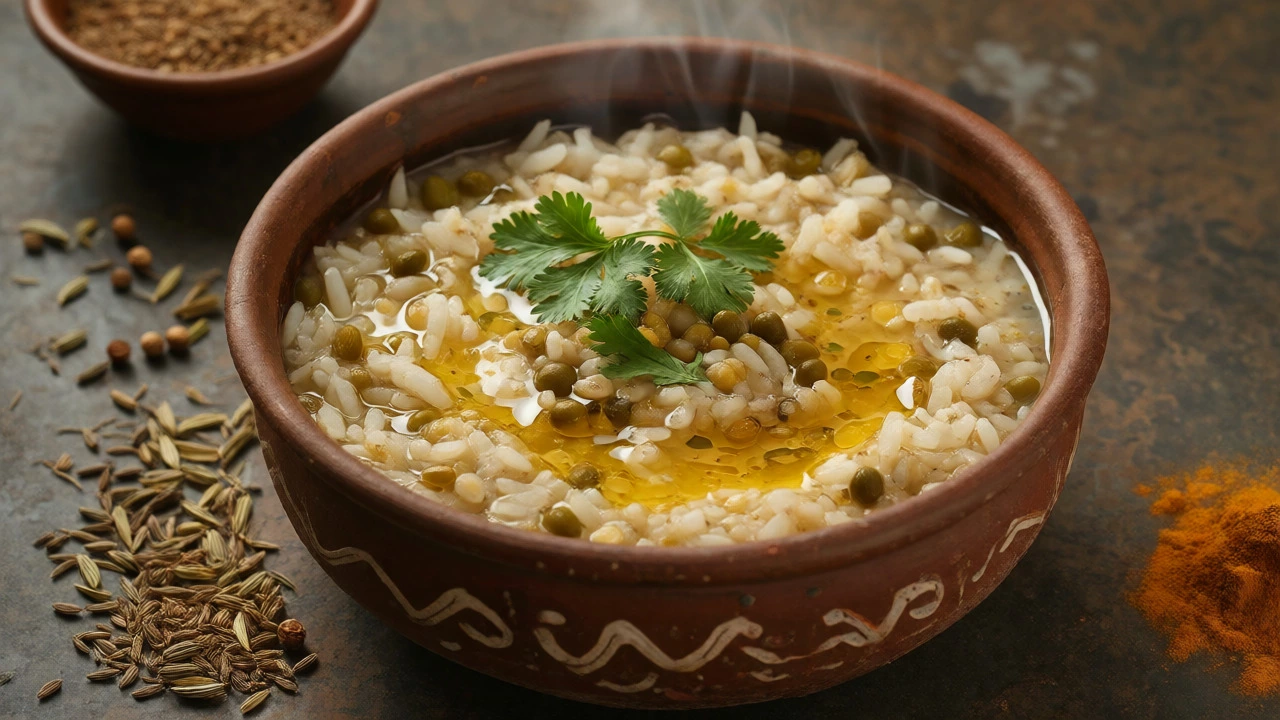
You don’t need expensive supplements to start. The most effective detox is often the simplest. For three to seven days, switch to a mono-diet known as Kitchari. This is a one-pot dish made from split mung beans and basmati rice, cooked with ghee and spices.
Why Kitchari? Because it is complete protein, easy to digest, and balances all three doshas. The split mung bean is easier to break down than whole beans, preventing gas. The rice provides energy without heaviness. Ghee lubricates the intestinal lining, helping toxins slide out rather than sticking to the walls.
During this reset:
- Eliminate processed sugar and caffeine. These spike insulin and stress the adrenal glands, distracting the body from its cleaning duties.
- Stop combining incompatible foods. Ayurveda suggests not mixing milk with sour fruits or fish with dairy. These combinations are believed to create Ama because they require different digestive enzymes that conflict.
- Eat dinner early. Finish your last meal at least three hours before bed. Your metabolism slows down at night. Eating late means food sits in your stomach, fermenting overnight.
Step 3: External Cleansing Techniques
Detox isn’t just internal. Your skin is your largest elimination organ. In Ayurveda, stimulating the skin helps pull toxins out through the pores.
Abhyanga is a self-massage technique using warm herbal oils. Before showering, rub warm sesame oil (for Vata/Kapha) or coconut oil (for Pitta) over your entire body. Focus on joints and areas where tension holds. Massage for 10-15 minutes, then take a warm shower. The heat opens pores, allowing the oil to carry surface toxins away while nourishing tissues.
Another powerful tool is Nasya. This involves putting two drops of medicated oil (like Anu Tailam) into each nostril upon waking. The nasal passages connect directly to the brain and head region. Nasya clears sinus congestion, improves mental clarity, and reduces headaches caused by accumulated phlegm or dryness.

When to Consider Professional Panchakarma
If you have chronic issues-persistent arthritis, long-term digestive disorders, or deep-seated fatigue-a home diet change might not be enough. This is where Panchakarma, the five-fold purification therapy, comes in.
Panchakarma is not something you do alone at home. It requires supervision by a qualified Ayurvedic practitioner. It involves intensive procedures like:
- Vamana: Therapeutic vomiting to clear excess Kapha from the lungs and stomach.
- Virechana: Purgation to eliminate excess Pitta from the liver and intestines.
- Basti: Herbal enemas that target Vata imbalances in the colon, which is considered the main seat of Vata.
These treatments are rigorous. They usually follow a preparatory phase called Snehana (oleation) and Swedana (sudation/sweating) to loosen toxins from deep tissues before expelling them. Do not attempt Basti or strong purgatives without professional guidance.
Signs Your Detox Is Working
How do you know it’s working? Don’t look for dramatic weight loss immediately. Look for subtle shifts:
- Clearer tongue coating: A thick white or yellow coat indicates Ama. As you detox, it should thin out or disappear.
- Better sleep: When your gut is calm, your nervous system settles. You’ll fall asleep faster and wake up refreshed.
- Mental sharpness: Brain fog lifts. Decision-making becomes easier.
- Regular bowel movements: Stools should be well-formed, brown, and float slightly. No straining, no urgency.
If you feel dizzy, overly weak, or emotionally unstable, ease off. Detox should leave you energized, not depleted. Listen to your body. Ayurveda is about harmony, not heroics.
Can I drink coffee during an Ayurvedic detox?
Ideally, no. Coffee is acidic and diuretic, which can aggravate Vata (dryness/anxiety) and Pitta (heat). If you must have caffeine, limit it to one cup and pair it with a little fat (like cream or ghee) to buffer its impact. However, for a true reset, switching to warm spiced water or herbal teas like tulsi or ginger is far better for clearing Ama.
How long should I stay on a Kitchari diet?
For most healthy individuals, 3 to 7 days is sufficient to reset digestion. Longer periods (up to 21 days) are sometimes recommended for serious healing but should be done under supervision. If you are pregnant, nursing, elderly, or have low blood pressure, consult a doctor before starting any restrictive diet.
Is fasting the same as detoxing in Ayurveda?
Not exactly. Fasting (Langhana) is a tool to rest the digestive system, but it is only appropriate if your Agni is strong. If your digestion is weak, fasting can increase Vata imbalance, leading to anxiety and poor nutrient absorption. Ayurvedic detox focuses on eating *lighter* and *cleaner*, not necessarily eating *nothing*. Gentle fasting is preferred over total starvation.
What role does Triphala play in detox?
Triphala is a polyherbal formula consisting of Amalaki, Bibhitaki, and Haritaki. It is a gentle bowel regulator and antioxidant. Taking half a teaspoon of Triphala powder with warm water at bedtime helps promote regular elimination without the dependency or cramping associated with harsh laxatives. It supports the removal of Ama from the colon.
Can I exercise during a detox?
Yes, but adjust intensity. High-intensity interval training (HIIT) might deplete you if you’re also reducing calories. Opt for yoga, walking, or swimming. Yoga poses like twists specifically help wring out the abdominal organs, aiding digestion and circulation. Movement helps lymph flow, which is crucial for transporting toxins to elimination sites.